
Most people arrive at a page like this having already decided what their fish has. Work the other way round: start from what you can actually see.
Start from the symptom
| What you see | Most likely | Next step |
|---|---|---|
| Fins clamped tight, no other sign | Water quality or chilling | Test water, check temperature |
| Sitting on the bottom, otherwise normal | Cold, or age in an older fish | Check thermometer, not the dial |
| Fin edges ragged or receding | Fin rot, or physical damage | Clean water first, then assess |
| White spots like grains of salt | Ich | Raise temperature gradually, treat |
| Fine gold or rust dust on the body | Velvet | Reduce light, treat |
| White fuzzy cotton-like growth | Fungal infection | Treat, check for underlying injury |
| Swollen belly, scales raised outward | Dropsy | Prognosis is poor. See below |
| One eye bulging | Popeye | Usually secondary. Clean water, then treat |
| Floating, sinking or listing sideways | Swim bladder problem | Fast, then reassess |
| Not eating for over a week | Many causes | Test water, check temperature |
| Rubbing against decor | Parasites or irritants | Test water, inspect closely |
| Gasping at the surface | Low oxygen, or nitrite | Test nitrite urgently |
That last row matters. A fish gasping at the surface in well-oxygenated water is a sign to test nitrite immediately, because nitrite interferes with the blood’s ability to carry oxygen.
The pattern behind most cases
Three conditions cause a large share of betta illness, and all three are environmental rather than infectious.
Ammonia or nitrite present, from an uncycled tank or a damaged bacterial colony. Chronic chilling, from no heater or an unreliable one. Chronic stress, from strong flow, a tank too small, or a tank mate that will not leave the fish alone.
Fix those and a surprising number of symptoms resolve without any medication at all. That is not a claim that infections do not happen. It is that the base rate of environmental causes is much higher than most disease charts imply.

Setting up a hospital tank
Worth having before you need it, because you will need it in a hurry.
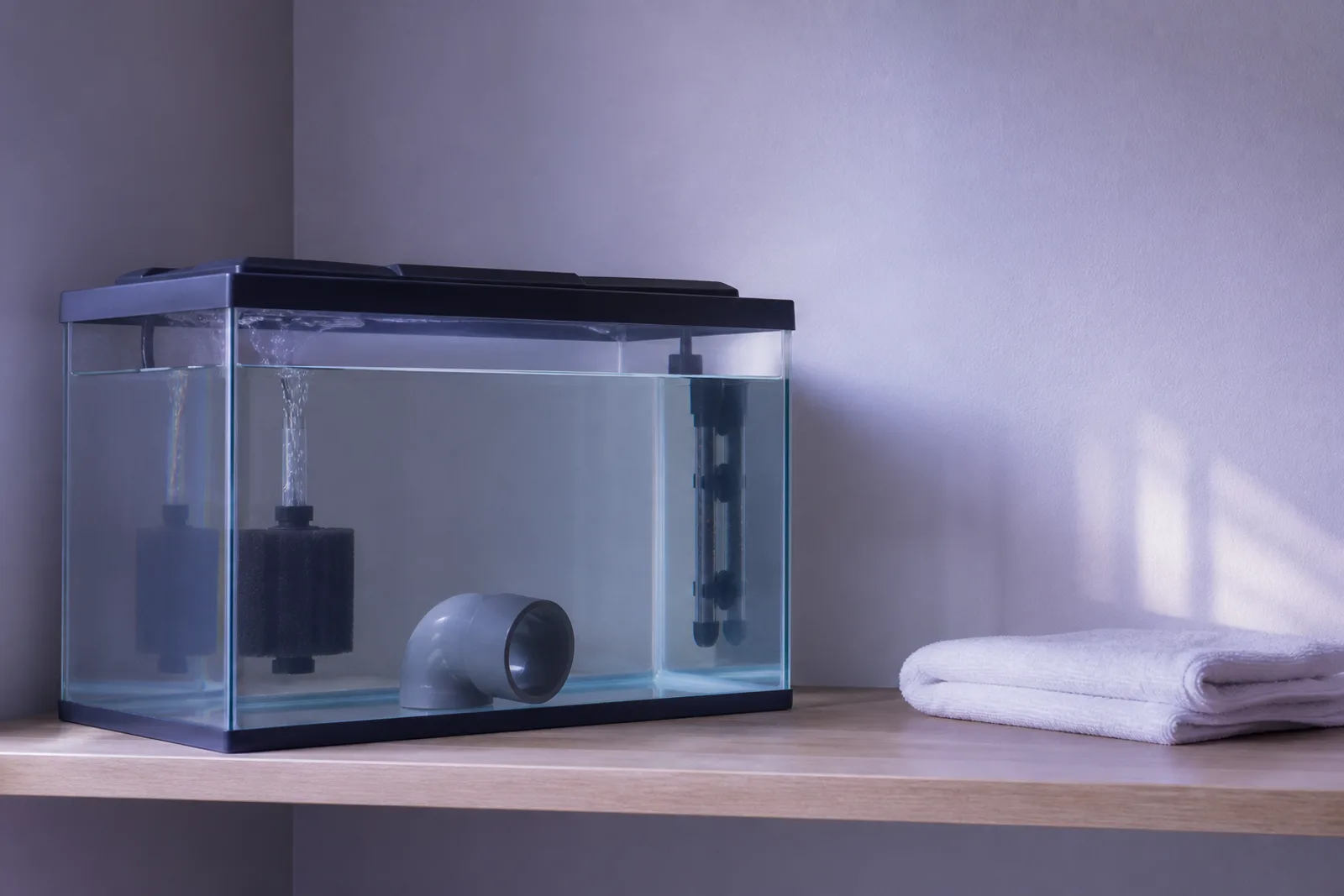
A small bare-bottom tank of two to five gallons, an adjustable heater, a sponge filter, and something for the fish to rest near. No substrate, so you can see what is happening and remove waste easily. No plants or snails, since many medications harm them.
Keep it dry and boxed until needed, then fill it with water from the main tank so the chemistry matches.
On medication
Three rules we hold to.
Treat one thing at a time. Combining medications is a common way to kill a fish the original illness might not have, so finish a course before starting another.
Follow the product in your hand. Dosages differ by formulation and concentration, so use the manufacturer’s instructions rather than a figure from a forum, and not from this page either. We do not publish dosages we cannot source, which is a deliberate limitation of this article.
Remove activated carbon from the filter before dosing, or it will adsorb the medication and quietly neutralise the treatment.
Conditions with poor outcomes
Being honest about this matters more than being encouraging.
Dropsy is not a disease but a sign of organ failure, usually kidney, and the raised scales come from fluid retention. By the time it is visible the underlying damage is advanced, and most cases end in death regardless of treatment. Keeping the fish comfortable and asking a vet about euthanasia is a legitimate response.
Advanced columnaris moves very fast, sometimes within a day or two, and outcomes are poor once it has spread.
Tuberculosis in fish cannot be reliably treated in home aquaria and has implications for handling. If a vet raises it, take the advice on hygiene seriously.
Prevention, which actually works
Nothing here is novel and all of it is more effective than treatment.
Cycle the tank before the fish goes in. Test weekly. Hold the temperature steady. Quarantine every new fish and, where practical, new plants. Feed small portions and remove leftovers. Keep the flow gentle. Fit a lid.
A betta in stable, clean, warm water with a reasonable amount of space gets sick rarely.
Where our limits are
Bunstay is written by an experienced keeper, not a veterinarian. This article points you at what to look at and what to rule out first. It cannot diagnose your fish, and several conditions look identical from outside while needing completely different treatment.
If your fish is deteriorating, or if you cannot tell what you are looking at, contact an aquatic veterinarian. That is not a disclaimer to skip past, it is the correct next step.
Where to go next
Water parameters are the first thing to rule out in almost every case, and knowing the numbers is what makes that possible.