
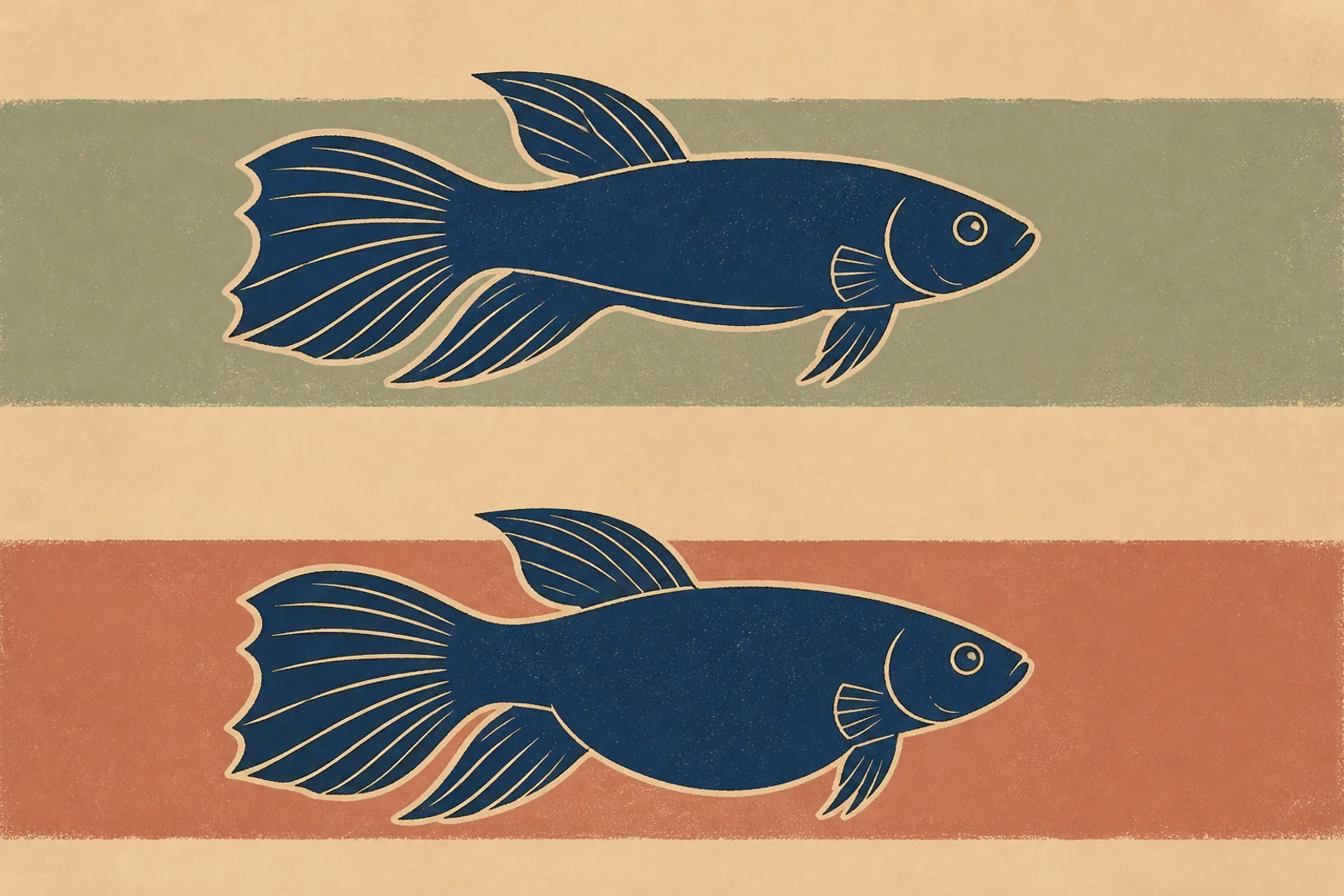
Constipation in a betta is a feeding problem wearing a medical costume. The cause is nearly always too much food, and the fix is nearly always less of it.
Recognising it
The belly is fuller than usual and stays full. The fish passes little or no waste. It may be slower than normal, or sit at an odd angle because a full gut is pressing on the swim bladder.
The scales lie flat. That detail matters, and the next section explains why.
What it is not
| What you see | What it is |
|---|---|
| Rounded belly, scales flat | Constipation, or simply a full fish |
| Swollen belly, scales standing out from the body | Dropsy. Serious, read that guide |
| Fuller belly in a female, otherwise normal | Eggs. Normal and resolves alone |
| Swelling on one side only | Neither. Worth a closer look |
Looking down from above is how you tell the first two apart, and it is the single most useful check on this page.
The fix
- Stop feeding for one to two days. A healthy adult tolerates about a week without food, so this is well inside safe territory.
- Resume with a smaller portion. Two to four pellets, twice a day, eaten within about two minutes.
- If you want a food-based nudge, offer frozen daphnia rather than a pea.
- Check what you have been feeding. Freeze-dried foods are dehydrated and swell after being swallowed, so soak them in tank water first or switch to frozen.
- Check the temperature. Digestion slows in cold water, and a betta below about 24 degrees Celsius processes food poorly.
Most cases resolve within the fast.
The pea, and why we do not recommend it
The blanched, deshelled, halved pea is the most repeated betta remedy on the internet. The idea is that it acts as roughage and moves things along.
A betta is a carnivore. Its gut is short and built for insects, larvae and small crustaceans, not for plant matter. Asking that system to process a legume in order to relieve a problem caused by overfeeding is a strange solution to a simple problem, and fasting achieves the same end without it.
If you want to feed something rather than nothing, frozen daphnia is the sensible choice. It is small, it is an invertebrate, and it suits the digestive system the fish actually has.
We are not claiming the pea harms fish. We are saying the reasoning behind it is poor and there is a better option, and that the real answer was always the portion size.
Preventing it
Portion control, which is the answer to most betta feeding questions. Two to four pellets twice a day, one fasting day a week, treats limited to once or twice a week, and frozen rather than freeze-dried where you have the choice.
If constipation keeps recurring in the same fish, the portions on ordinary days are too big.
Where to go next
The portion guide covers how much and how often. The fasting article covers why a missed day is harmless, and the swim bladder guide covers buoyancy problems that outlast the fast.