
A betta that cannot hold its position in the water is distressing to watch, and the most common cause is also the most fixable.
Swim bladder disorder is not a single disease. It is a description of a symptom: the organ that controls buoyancy is not working properly. What matters is why.
What you see
Floating helplessly at the surface and unable to swim down. Sinking to the bottom and unable to rise without visible effort. Listing to one side, or swimming nose-down or tail-up. In some cases spinning or rolling.
The fish is usually alert throughout, which is part of what makes it upsetting. It is trying to swim normally and cannot.
Causes, most common first
| Cause | Reversible | Clue |
|---|---|---|
| Constipation from overfeeding | Usually | Swollen belly, gradual onset, recent heavy feeding |
| Gulped air while surface feeding | Usually | Sudden onset right after eating floating food |
| Bacterial infection | Sometimes | Other signs present, fish off its food |
| Physical injury | Sometimes | Follows a jump, a fall or a fight |
| Congenital deformity | No | Present from young, common in double tails |
| Rapid temperature change | Usually | Follows a large or cold water change |
Constipation is the leading cause by a wide margin, which is why the first response is dietary rather than pharmaceutical.
Supportive care
Whatever the cause, these make the fish more comfortable and none of them risk harm.
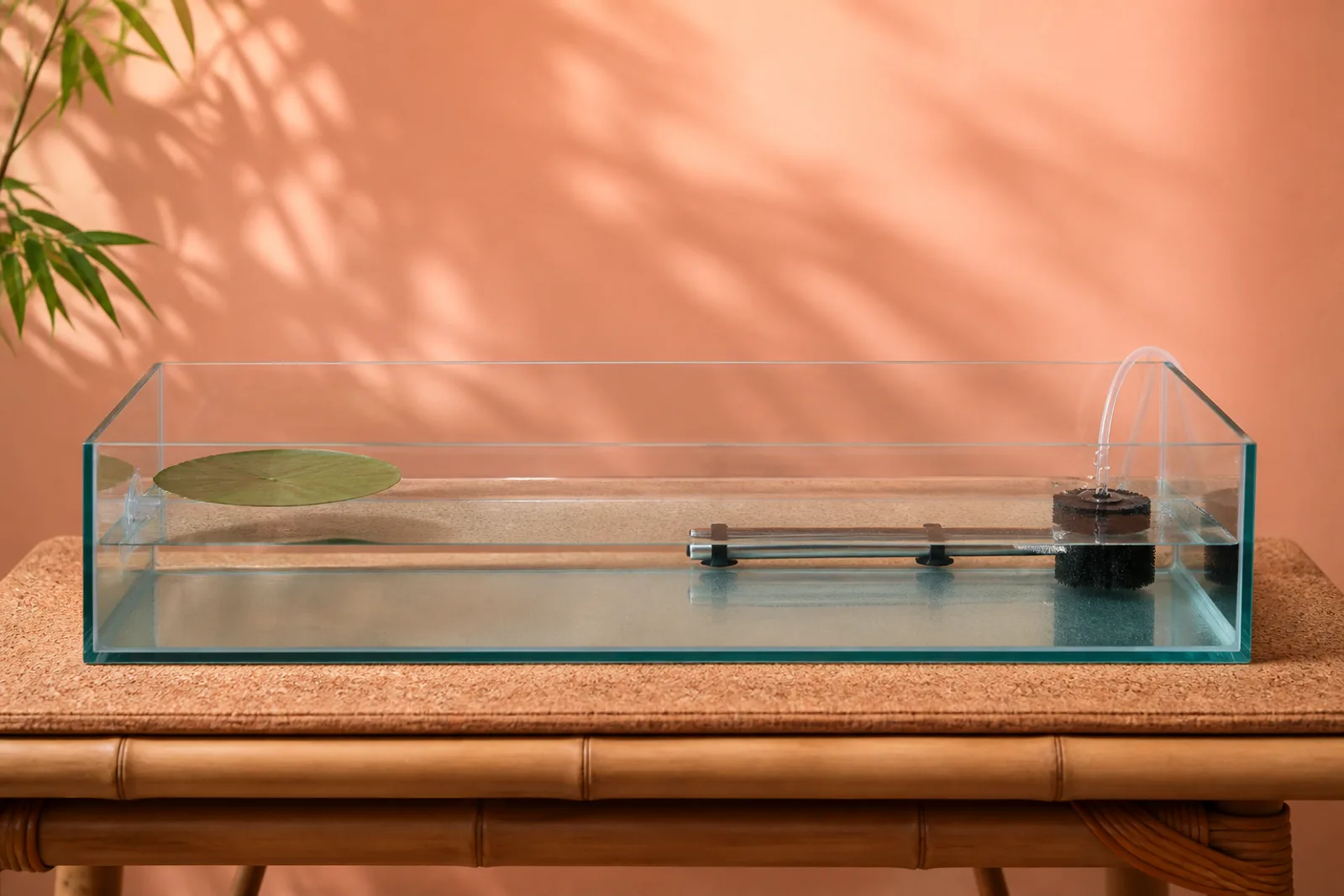
Lower the water level. A shallower tank means less effort to reach air, which matters a great deal for a fish that cannot control depth.
Add a resting place near the surface. A broad silk or live leaf a couple of centimetres down gives somewhere to sit without swimming.
Reduce flow to near zero. A fish that cannot steer is at the mercy of any current.
Hold the temperature steady in the normal range. Do not raise it hoping to speed digestion.
About the pea
You will be told to feed a shelled cooked pea. It is one of the most repeated pieces of advice in the hobby and the evidence behind it is weak.
Bettas are carnivores with a short digestive tract poorly suited to plant matter. Fasting achieves the same goal, is better supported, and carries no risk of adding indigestible material to a gut that is already the problem. If you want something that helps things move, daphnia is a more appropriate choice and is a food bettas are built to eat.
We are not claiming peas definitely harm fish. We are saying fasting is the better first move and we would rather recommend the option with fewer unknowns.
When it is not diet
If two to three days of fasting and supportive care change nothing, reconsider.
Look for other symptoms. A fish that is also clamped, off its food, discoloured or showing raised scales is dealing with something broader, and the buoyancy problem is one sign among several. That is a veterinary conversation.
Sudden onset immediately after a large or cold water change points at temperature shock rather than digestion, and stabilising the tank is the response.
Onset after a jump or a fight suggests injury. Those cases can improve over weeks with supportive care, and some do not fully resolve.
Living with a permanent case
Some bettas, particularly double tails with a compressed body shape, have buoyancy problems from the start. That is anatomy rather than illness.
These fish often live perfectly acceptable lives in a shallow, low-flow, heavily furnished tank with resting places near the surface and food that is easy to reach. The adjustment is to the tank rather than to the fish.
Our limits here
We are keepers, not veterinarians. This article covers what we can support: the common causes, the fasting-first approach, and supportive care that carries no downside. It deliberately contains no medication dosages.
If the fish deteriorates, shows other symptoms, or does not improve within about a week, contact an aquatic veterinarian.
Where to go next
Since overfeeding is the most common cause, portion size is where the lasting fix usually lives.