
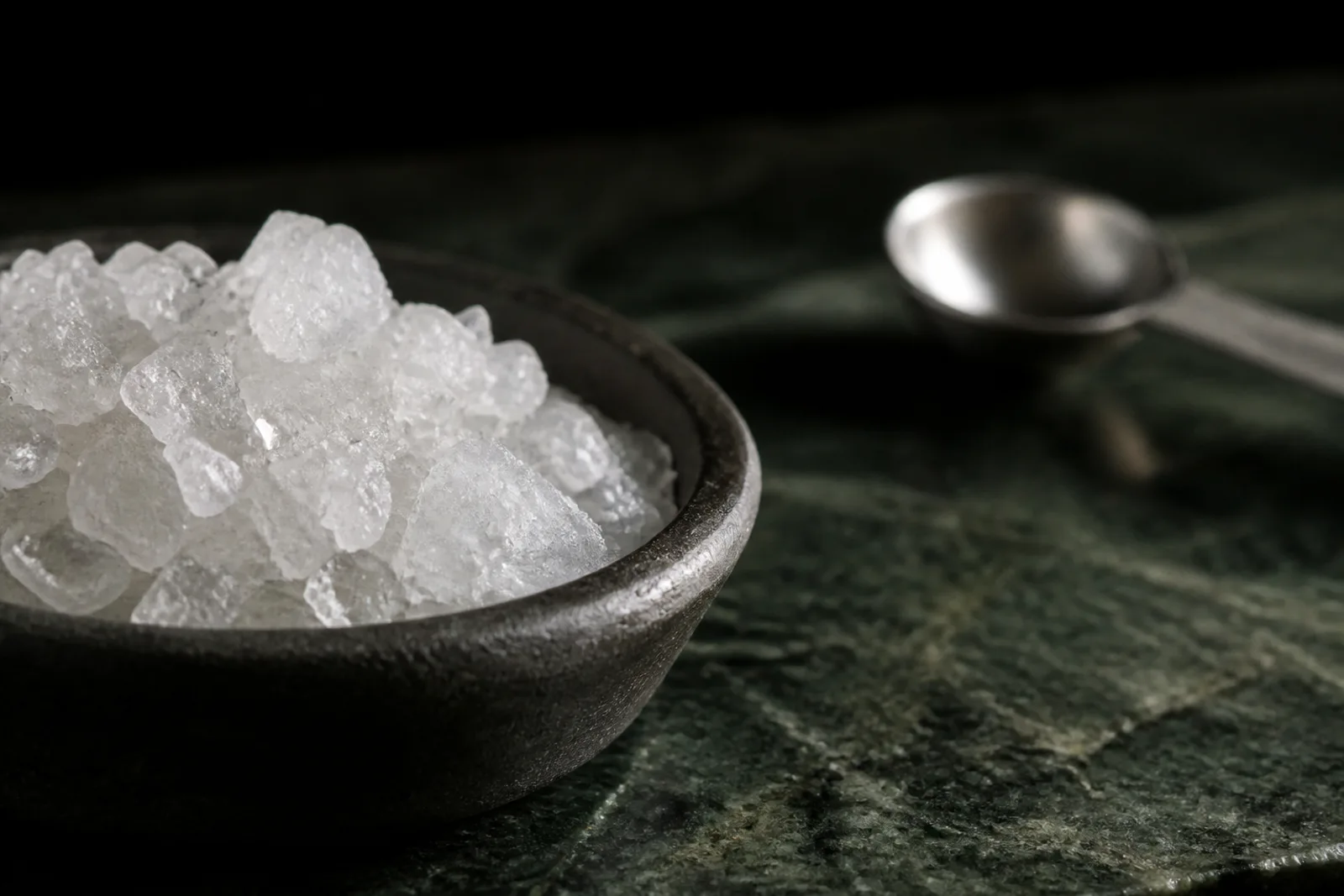
Aquarium salt gets recommended for almost everything, which is a good sign that it is being used as a reflex rather than as a treatment.
It is a real tool with a narrow set of uses. Understanding the mechanism is what tells you when it is one of them.
What it does
Salt raises the concentration of dissolved solids in the water, which reduces the osmotic gradient a freshwater fish is constantly working against. A stressed or damaged fish spends less energy on that work, which can help it recover.
At higher concentrations it is also hostile to some external parasites and some external bacteria, because they tolerate the change less well than the fish does.
That is the whole mechanism. Read what it implies.
It does nothing for an internal infection, because it never gets inside the fish. It does nothing for swelling caused by organ failure. And it does nothing whatever about ammonia, nitrite or temperature, which is what is actually wrong in most tanks where someone reaches for salt.
What it is not
Not a tonic. Bettas are freshwater fish. Permanently salted water is a permanent low-grade stressor on the kidneys, and it means that when you genuinely need salt as a treatment, you have no headroom to raise the concentration.
Not table salt. Table salt normally carries iodine and anti-caking agents that have no place in an aquarium. Aquarium salt is plain sodium chloride.
Not Epsom salt. Epsom salt is magnesium sulphate, used for different problems such as suspected constipation and swelling. The two are not substitutes for each other, and swapping them means treating the wrong thing.
Not a substitute for clean water. If the tank has an ammonia reading, salt is not the answer and delays the one that is.
Where it reasonably fits
| Situation | Salt’s role |
|---|---|
| Some external parasites | A recognised part of treatment, per the product instructions |
| Minor external damage while water is corrected | Can support recovery |
| Osmotic support for a struggling fish | Sometimes, short term |
| Fin rot | Sometimes adjunct. Clean water is the primary treatment |
| Internal infection | No role |
| Dropsy or organ swelling | No role. Veterinary case |
| Bad water quality | No role. Change the water |
| Routine prevention | No role, and counterproductive |
The thing people get wrong
Salt does not evaporate.
Top up a tank that has lost water to evaporation and the salt concentration goes up, because you replaced water and not salt. Dose again on top of that and it goes up further. The only thing that removes salt is a water change with unsalted water.
This is how fish end up in far higher concentrations than anyone intended, over a week of ordinary maintenance. If you are treating with salt, track how much is in there and what each water change removed.
Why there is no dose on this page
Doses differ between products, between the in-tank method and the short bath method, and between conditions. The tank volume you are working with is small, so the margin for an arithmetic error is small too, and a decimal point in the wrong place is a dead fish rather than a mild overdose.
Use the instructions printed on the product you bought. Do not scale a dose you read on a forum, do not combine salt with a medication unless that medication’s label says you may, and measure the actual water volume rather than the number on the box, since substrate and decor displace a surprising amount.
If the fish is seriously ill, or if you are unsure whether salt is even the right category of treatment, contact an aquatic veterinarian. That is not a disclaimer for its own sake: guessing at medication is one of the more common ways a treatable fish gets worse.
Treat in a bare tank
Salt harms most plants and most invertebrates. A hospital tank with no substrate also means you know the real water volume, which is what makes any dose accurate.
Where to go next
The diseases pillar covers identifying what is actually wrong, and the quarantine guide covers setting up the bare tank that salt treatment belongs in.