
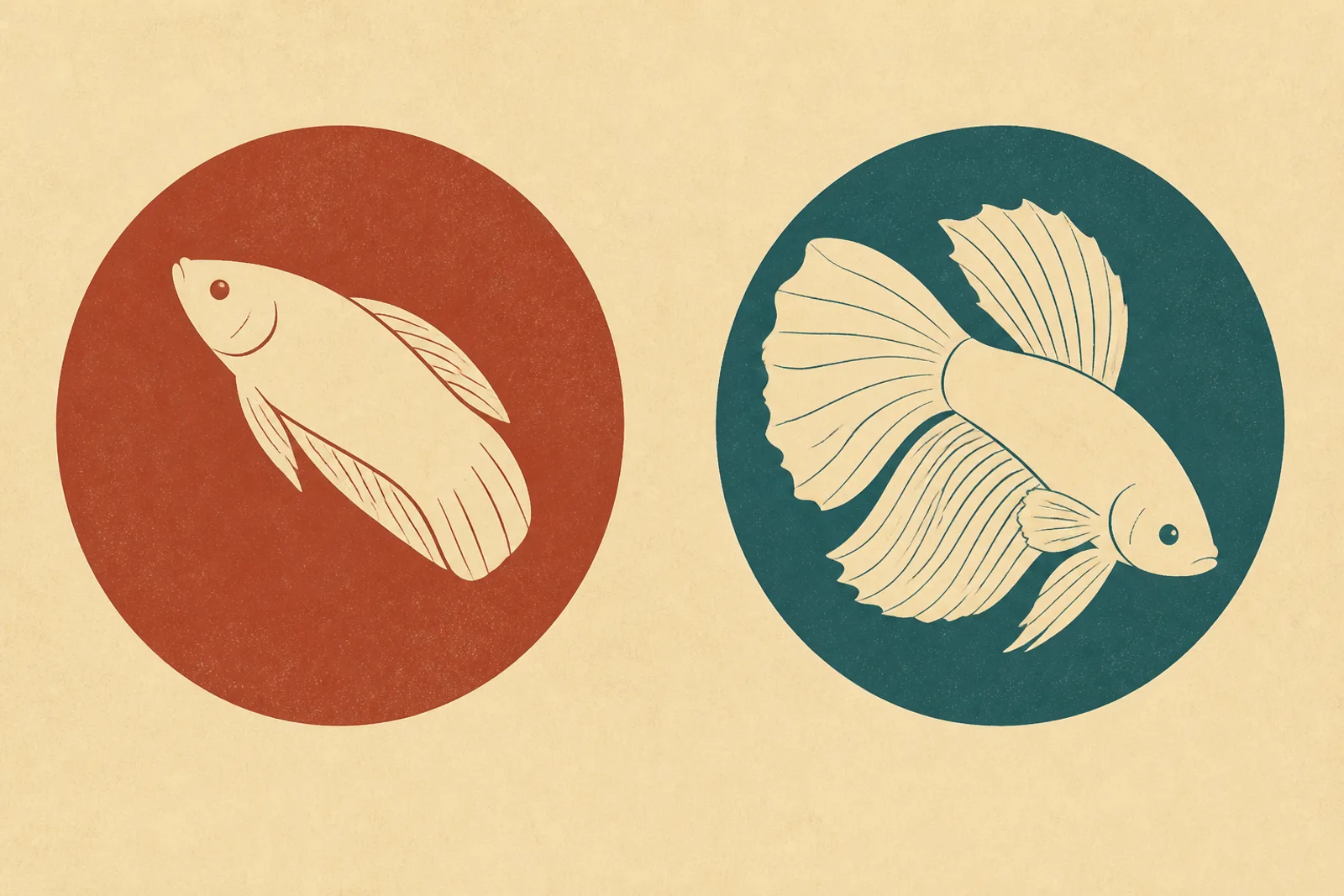
Clamped fins are usually the first thing a betta does when something is wrong, and they are not a diagnosis. The fish is telling you it is uncomfortable without telling you why.
A healthy betta carries its fins spread and flowing, with the dorsal raised. A clamped fish holds everything folded tight, often sitting low in the tank.
Check these two first
Test the water. Ammonia and nitrite must be zero. Nitrate under about 20 ppm. Use a liquid kit. This single check explains more clamped fin cases than everything else combined.
Read the thermometer. Not the heater dial, which is frequently wrong. Below about 24 degrees Celsius a betta becomes lethargic and clamps. If it is cold, raise the temperature gradually over several hours rather than all at once.
Both are fixable tonight, and if either is the cause the fins usually open within a day or three of correction.
The likely causes, in order
| Cause | Clue |
|---|---|
| Ammonia or nitrite | Any reading above zero. Often with gasping |
| Cold water | Thermometer below 24 °C, fish sluggish and off food |
| Recent stress | New tank, new fish, transport, rearranged decor |
| Parasites | Rubbing or flicking against objects, sometimes visible spots |
| Bacterial infection | Fin edges receding, redness, patches |
| Too much flow | Fish pinned near the outflow, or hiding constantly to escape it |
Work down the list. Do not skip to the bottom because an infection is the more dramatic explanation.
Recent stress deserves patience
A betta that has just moved house clamps for a few days and that is normal. So does one that arrived yesterday from a shop cup, or one whose tank you rearranged.
In that case: lights low, no visitors, offer food but do not push it, and leave the fish alone. Most open up within a week. Handling and testing and treating a fish that simply needs a quiet few days makes the recovery slower.
When it is something specific
Clamping alongside any of these changes the picture:
Distinct raised white dots scattered on the body, which points to white spot disease. Cottony white or grey tufts, which points to a fungal or bacterial growth. Fin edges ragged, receding, or darkened at the margin, which points to fin rot. Swollen body with scales standing out from it, which is a serious sign and belongs with a veterinarian rather than a shop shelf.
In each case the specific sign directs the response. The clamping does not.
What not to do
Do not dose a broad spectrum medication because the fish looks unwell. The most likely cause is water chemistry, and medication does not fix chemistry while adding another variable and another stressor.
Do not raise the temperature sharply. Gradual changes only.
Do not do a full water change to be safe. Large complete changes shock the fish and can damage the bacterial colony. Twenty five to fifty percent, dechlorinated and temperature matched.
Where to go next
The diseases pillar covers each specific presentation and the fin rot guide covers what actual tissue loss looks like and how it differs from this.