
Most betta illnesses give you days to work out what they are. This one does not.
Columnaris can go from a slightly off looking fish to a dead one inside 48 hours, and the single most useful thing to know about it is that it is bacterial rather than fungal, because that decides everything you do next.
What it looks like
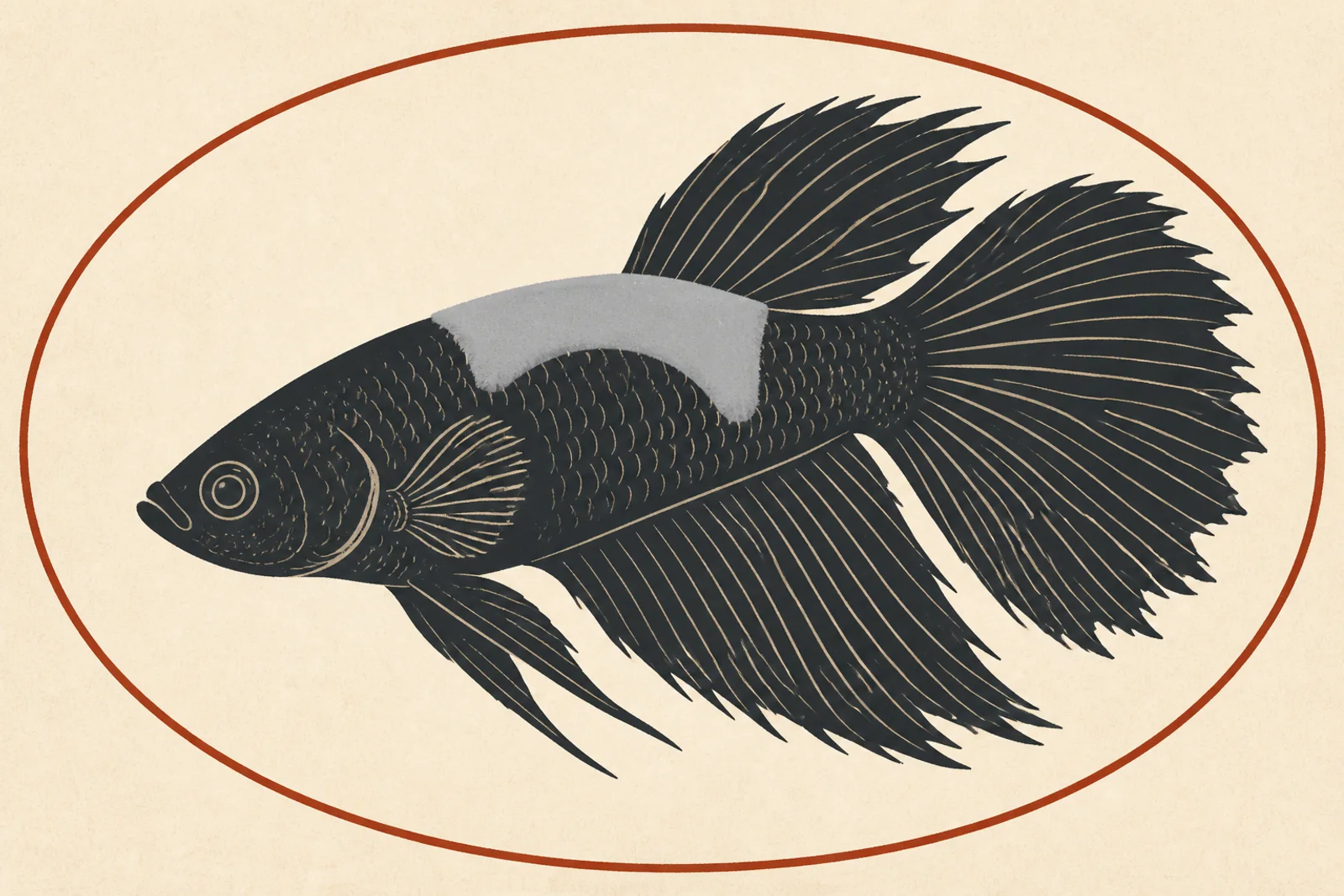
The presentation people recognise is a pale grey or white patch shaped like a saddle, sitting across the back just behind the head.
It also appears as a mouth that looks fuzzy or eroded, which is where the common name cotton mouth comes from. Fin edges can go ragged and recede unusually fast. Pale patches can turn up anywhere on the body.
The texture reads as cottony, and that is the trap. Every instinct says fungus. It is not a fungus, and antifungal products will not touch it.
Why the mistake matters so much
| Looks like | Actually | Consequence of guessing wrong |
|---|---|---|
| Fungus, because it is cottony | Bacterial infection | An antifungal does nothing while the fish deteriorates |
| Fin rot, because edges recede | Can be either | Fin rot rarely moves this fast |
| Ich, because there are pale marks | Ich is distinct raised dots | Ich treatment includes heat, which makes columnaris worse |
That last row is the dangerous one. Standard advice for white spot is to raise the temperature. Doing that here accelerates the infection.
What to do, in order
- Test the water immediately. An outbreak almost always follows a water quality failure, a chill or an injury.
- Do a water change, dechlorinated and temperature matched.
- Do not raise the temperature. Keep the tank at the lower end of the normal betta range while you treat.
- Move the fish to a bare hospital tank if you have one running, so the dose is accurate and the display tank is not medicated.
- Contact an aquatic veterinarian. Not as a formality: the correct antibacterial depends on the presentation and on what is legally available where you live, the window is measured in hours, and getting it wrong once often means there is no second attempt.
- Remove any invertebrates before treating, since most treatments harm them.
We do not publish a medication or a dose for this, and the reason is not caution for its own sake. Columnaris responds to some antibacterials and not others, the choice is regional, and a wrong pick costs the fish the only window it has.
Why it moved so fast
The bacterium is frequently present in aquariums at low levels without causing anything. It becomes an infection when the fish stops holding it in check, which means a stressor came first.
The usual ones: ammonia or nitrite in the water, a temperature crash, an injury from decor or a tank mate, and overcrowding. Finding which of those happened is part of the treatment, because otherwise it happens again.
Preventing the next one
Everything in the prevention guide applies, and two items apply particularly here.
Keep the water clean, because this disease is opportunistic and clean water is what denies it the opportunity. And quarantine new fish, since an outbreak in a tank that has been stable for a year usually arrived with something.
Where to go next
The diseases pillar covers how to tell the presentations apart, and the prevention guide covers the conditions that stop this one appearing at all.