
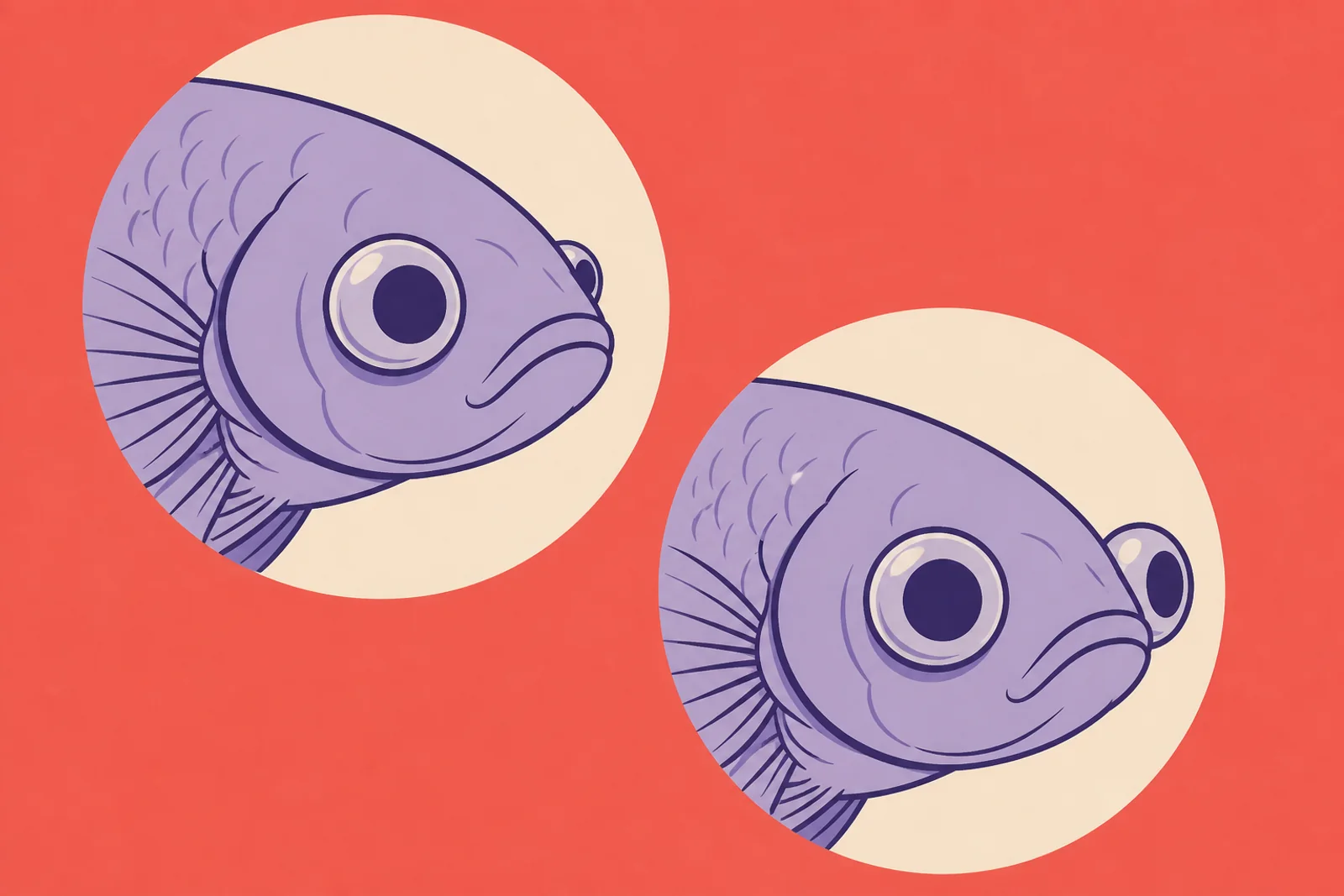
Popeye is an eye pushed outward by fluid behind it. Before anything else, count how many eyes are affected, because that answers most of the diagnostic question.
One eye or both
| One eye | Both eyes | |
|---|---|---|
| Usual cause | Physical injury | Something systemic |
| Typical origin | Knock against decor, netting, a bite | Internal infection, organ trouble |
| Fish otherwise | Normal, eating, active | Often lethargic, off food |
| Outlook | Frequently resolves in clean water | Depends entirely on the cause |
| First move | Clean water, remove the hazard | Water test, then a veterinarian |
A single bulging eye on a fish that is otherwise behaving normally is the common version and the reassuring one. Both eyes on a fish that is also sitting low and refusing food is not.
What to do for a single eye
- Test the water. Ammonia and nitrite at zero. Poor water both causes this and slows the healing.
- Change 25 percent, dechlorinated and temperature matched, and keep the water clean with regular small changes.
- Find what it hit. Run a stocking over every ornament, and remove anything that snags. Sharp resin seams and narrow cave mouths are the usual culprits.
- Check the flow. A fish pushed around by the outflow collides with things.
- Wait. Recovery is measured in weeks, not days, and the eye may not end up perfectly symmetrical.
- Keep feeding normally.
Most of these cases need clean water and patience rather than medication.
What to do when both eyes are affected
Test the water, move the fish to a clean bare hospital tank, and contact an aquatic veterinarian.
Bilateral popeye is a sign pointing inward, and the useful question is what is causing it rather than how to shrink the eye. If the body is also swollen with scales standing out, read the dropsy guide, because that combination is serious.
We do not publish medications or doses for this. The right treatment depends on the underlying cause, which cannot be determined from the outside.
Cloudy eye is a different thing
An eye that has gone hazy or milky on the surface, without protruding, is cloudy eye. It points at water quality, a surface injury or an infection.
The two can occur together, and they are separate observations. Note which you are seeing, since it changes the reading.
Preventing it
Most unilateral popeye traces to the tank rather than to the fish. Silk or live plants instead of stiff plastic, no ornaments with narrow openings or unfinished seams, gentle flow, and a lid so a startled fish does not injure itself trying to leave.
The decor and lid guide covers the stocking test that catches nearly every offending object before it causes an injury.
Where to go next
The diseases pillar covers the other presentations, the decor guide covers making the tank physically safe, and the aquatic vet guide covers when to escalate.