
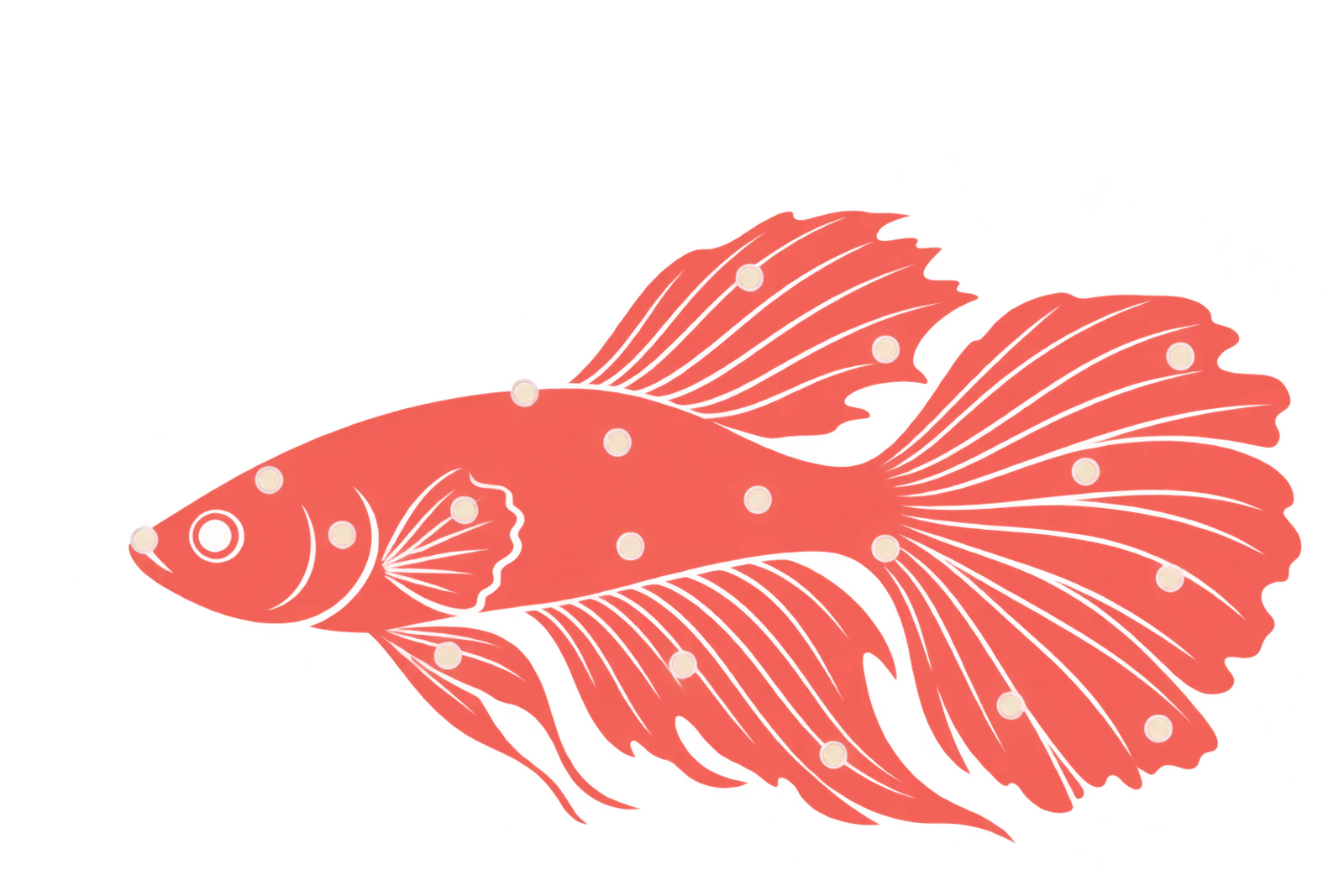
Ich is a parasite, and it is one of the few betta problems you can identify by looking. Distinct raised white dots the size of salt grains, scattered without pattern across the fins and body.
If the spots are flat, fuzzy, or in one patch, it is probably not ich. Read the diseases pillar for those.
Recognising it
| Feature | Ich | Not ich |
|---|---|---|
| Shape | Raised, distinct, round | Flat patch, or cottony tuft |
| Size | Roughly a grain of salt | Larger irregular growths |
| Distribution | Scattered, fins and body | One localised area |
| Early behaviour | Flicking and rubbing on objects | Varies |
The rubbing usually comes first. A fish darting at the substrate or scraping against wood a few days before spots appear is the classic sequence.
Why the life cycle decides everything
The parasite has stages. Embedded under the skin it is protected, and no medication in the water reaches it. It then leaves the fish, forms a cyst, and the cyst releases many free-swimming young.
Only that free-swimming stage is vulnerable.
Two consequences follow, and they are the whole of ich treatment.
Treatment must run long enough for every embedded parasite to emerge. The spots disappearing means the visible stage has left the fish, not that the infection has gone, so stopping there guarantees a return.
The tank is infected, not just the fish. Moving the betta to a clean container and treating it alone leaves a tank full of cysts waiting.
What to do
- Test the water. Ammonia and nitrite at zero. An outbreak usually follows a stressor, and bad water is the most common one.
- Remove activated carbon from the filter. Carbon adsorbs medication and will quietly reduce your dose to nothing.
- Raise the temperature gradually toward the upper end of the betta range. This speeds the life cycle so parasites reach the treatable stage sooner. Raise it slowly, over hours rather than minutes, and keep an eye on the fish.
- Treat with a product intended for white spot, at the dose on the label. Do not improvise, do not combine products, and do not scale a dose by guesswork.
- Continue for several days after the last spot has gone, as the label directs.
- Vacuum the substrate during changes to remove cysts.
- Keep the fish fed and leave the light low.
If the fish deteriorates, if the gills are affected and it is struggling to breathe, or if the treatment produces no change over its full course, contact an aquatic veterinarian. We do not publish dosages here for the same reason we do not publish diagnoses: getting either wrong in five gallons of water is dangerous.
Preventing the next one
Quarantine every new fish for a fortnight in a separate cycled tank. Never add shop water to your display tank; net the fish across instead. Keep the temperature steady, because chilling is what turns a low-level presence into an outbreak.
Where to go next
The diseases pillar covers what the other white, fuzzy and patchy presentations are, and the quarantine guide covers how to set up the tank that prevents this.