
25 to 28 degrees Celsius, which is 77 to 82 Fahrenheit. That is the range, and the rest of this article is about why the number matters less than people think and the steadiness matters more.
Why bettas need it warm
Bettas come from shallow tropical water that stays warm year round. A cold betta does not simply feel uncomfortable: its metabolism slows, it digests poorly, it stops eating, and its immune response is suppressed.
That last one is the reason cold water shows up behind so many other problems. A chilled fish is a fish that stops holding off the bacteria and parasites already present in every aquarium. Fin rot, white spot and columnaris all become likelier in a tank that keeps dropping overnight.
Stability over precision
If you could choose between a tank permanently at 25 and one that reaches 28 every afternoon and falls to 21 by morning, take the steady 25 without hesitating.
The swing is the stressor. Each change asks the fish to adjust, and a fish adjusting twice a day is spending on that what it should be spending on being healthy.
This is also why chasing a specific number with the heater dial is wasted effort. Set it, verify it with a thermometer, and stop touching it.
Reading the temperature properly
| Do | Why |
|---|---|
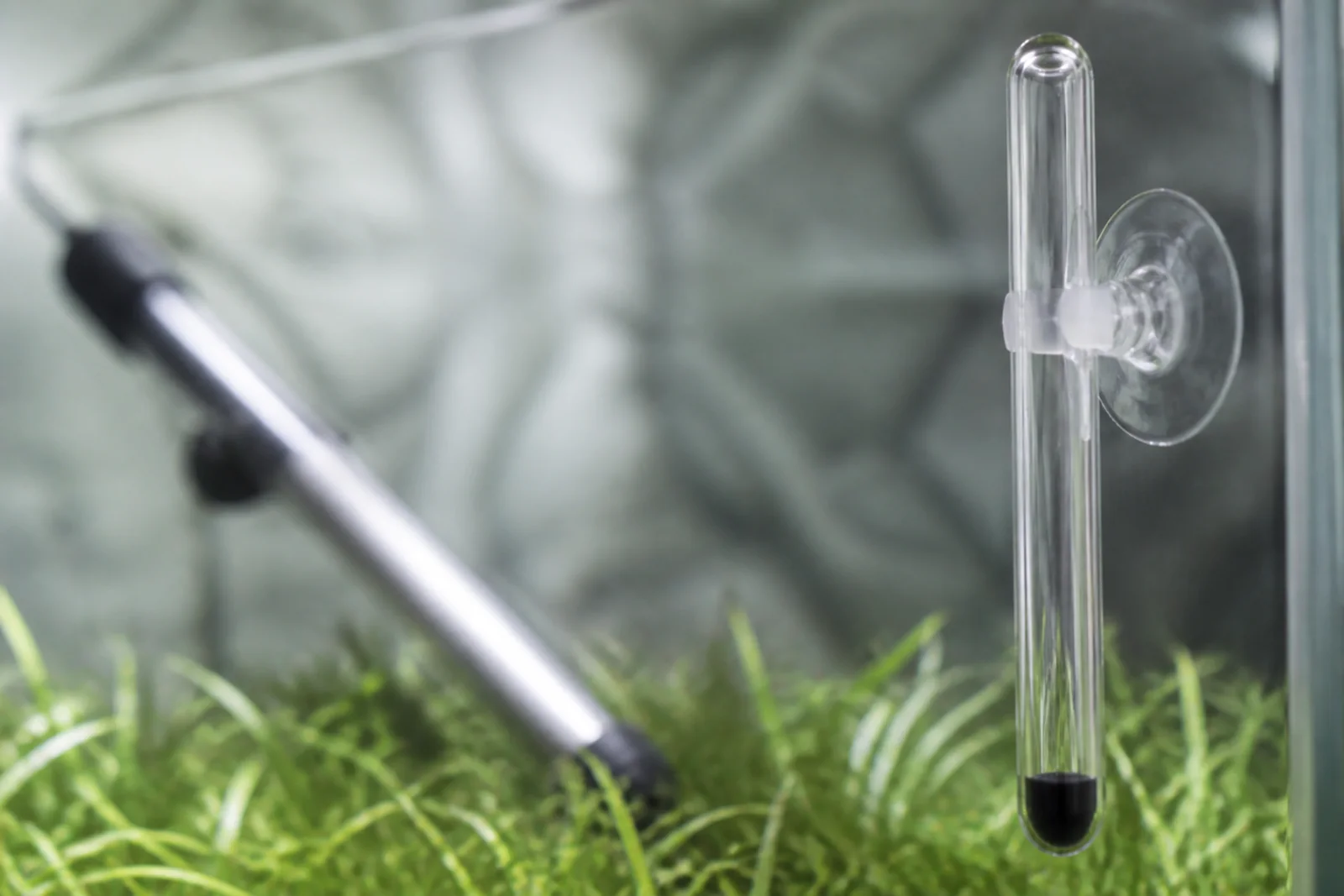
| Use a separate thermometer | Heater dials are frequently wrong |
| Place it away from the heater | Next to the element it reads the element, not the tank |
| Read it at the same time each day | Comparable numbers rather than random ones |
| Check it after a power cut or a water change | Both move the temperature |
| Replace it if it looks doubtful | They are inexpensive and they do drift |
A heater can fail in two directions. It can stop heating, which is obvious within a day. It can also stick on, which cooks the tank and is far more dangerous. A thermometer is what tells you either has happened.
Common causes of a cold tank
No heater at all, which is still routinely sold alongside small tanks.
A heater too small for the volume, running constantly and never getting there. A rough guide is around 5 watts per gallon, more in a cold room.
A tank placed against an exterior wall, under a draughty window, or near a door that opens onto winter.
A heater that has failed silently and is still plugged in.
Common causes of a tank that is too warm
Direct sunlight, which is the biggest one and also drives algae.
A heater stuck on, which needs the plug pulled immediately while you sort it out.
A room that gets very hot in summer with no air conditioning. Floating a sealed bag of cool water, or a frozen bottle, brings it down gently. Never add cold water straight to the tank.
If it is wrong right now
Correct it slowly. One or two degrees over a few hours, not a jump.
If the tank is cold and the fish is sluggish and off food, expect it to pick up over a day or two once the temperature is right. If it does not, test the water, because cold and ammonia often turn up together in the same neglected tank.
Where to go next
The water parameters guide covers every reading in one place. The heater article covers choosing and sizing one, and the temperature change guide covers moving the number safely when you have to.