
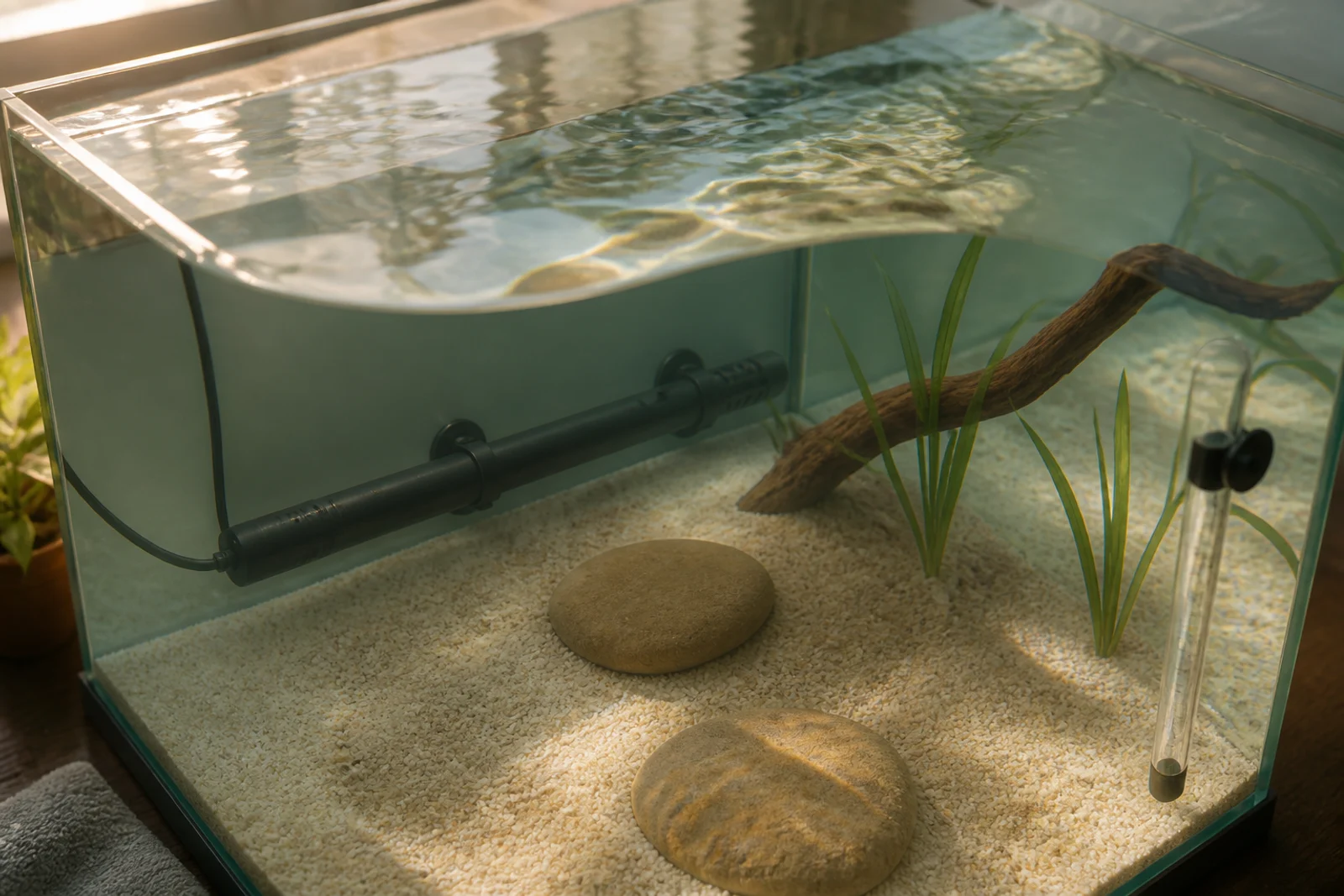
Yes. This is one of the few betta questions with a one-word answer.
Bettas are tropical fish from warm, shallow water in Southeast Asia. They need roughly 25 to 28 °C, held steady, and almost no home sits there on its own.
Why room temperature is not enough
Two separate problems, and the second one is the bigger of the two.
The average is usually too low. A house at 20 or 21 °C is comfortable for you and several degrees short for a betta. A cold fish eats less, moves less and digests more slowly.
The swing is worse than the average. Rooms drop overnight, warm through the afternoon, and change with the season. A fish riding that cycle every day is spending energy on adjustment, and repeated chilling suppresses the immune system. A great deal of what gets treated as mystery illness is a fish that has been cold too often.
What “too cold” looks like
| Temperature | What you see |
|---|---|
| 25 to 28 °C | Active, alert, feeding, fins carried open |
| 23 to 25 °C | Slower, less interested in food, still functional |
| 20 to 23 °C | Lethargic, resting on the bottom, refusing food |
| Below 20 °C | Immune function drops sharply, illness follows |
A betta sitting on the bottom and ignoring food is one of the most common reasons people think their fish is dying. Check the thermometer before anything else.
Stability beats precision
If you take one thing from this: a tank held at a steady 25 °C is better for your fish than one that touches 27 every afternoon and falls to 21 overnight.
Do not chase a specific number. Set the heater, verify with a thermometer, and leave it alone. Adjusting it repeatedly creates the instability you are trying to avoid.
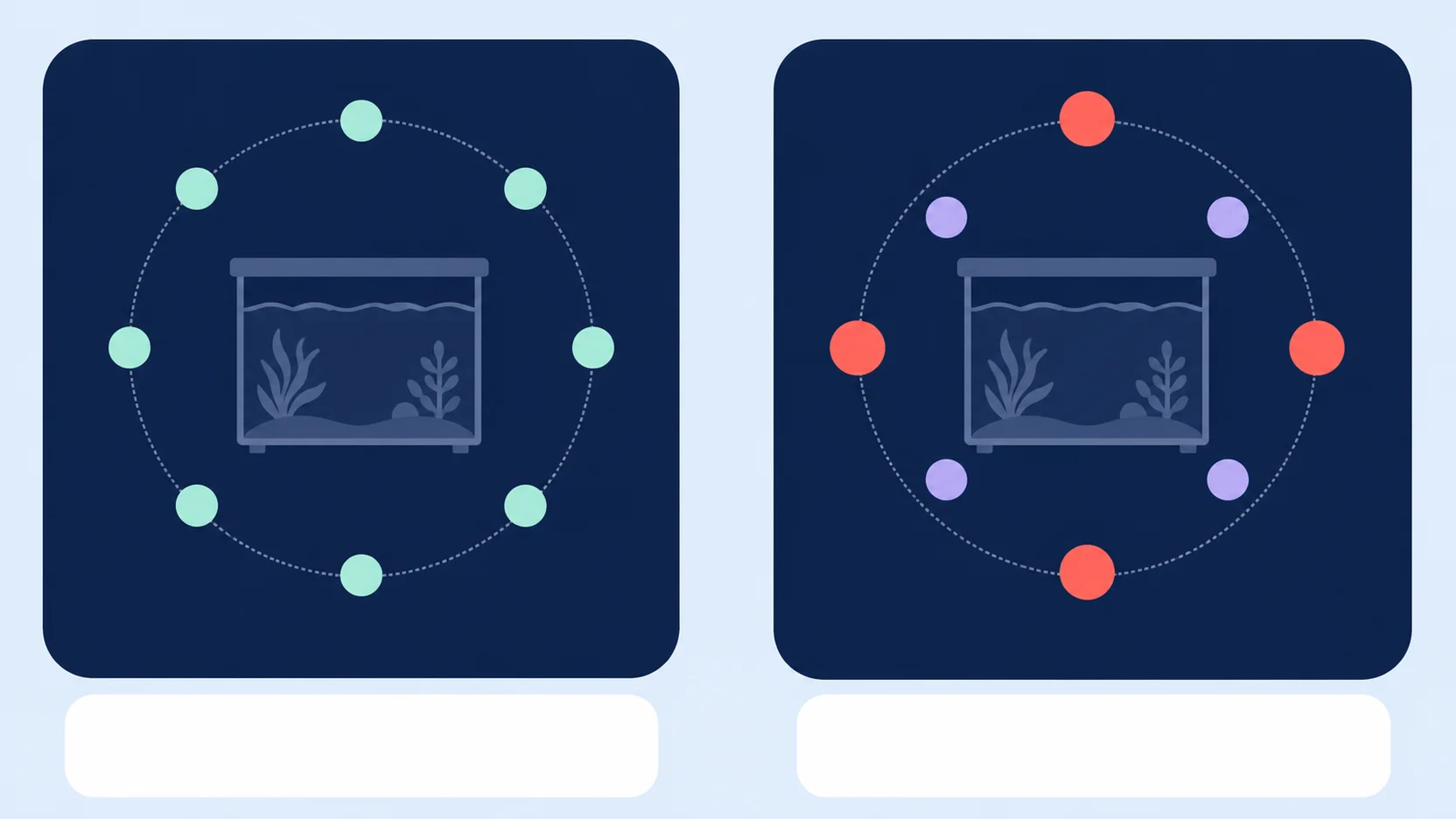
- Stable temperature
- Repeated temperature swings
Choosing a heater
Buy adjustable, with a thermostat. Preset heaters aim at a fixed temperature that may not match your target, and unregulated ones simply heat until you intervene.
Sizing, as a starting point:
| Tank | Watts | Note |
|---|---|---|
| 5 gallon | 25 W | Go to 50 W in a cold room |
| 10 gallon | 50 W | The most common pairing |
| 20 gallon | 100 W | Or two smaller heaters for redundancy |
Oversizing is not dangerous if the thermostat works, and it means the heater runs in shorter bursts. Undersizing means it runs constantly and still loses on a cold night.
Submersible heaters mounted horizontally near the bottom heat more evenly than vertical ones near the surface, since the warmed water rises through the tank.
The thermometer is not optional
Heater dials are frequently wrong, sometimes by several degrees. A separate thermometer costs very little and is the only thing that tells you what the water is actually doing.
Put it at the opposite end of the tank from the heater, so you are reading the tank rather than the heater. Check it whenever you look at the fish. It takes a second and it is how you catch a failure.
Heaters fail in two directions. Failing off is obvious within a day. Failing stuck on is the dangerous one, and by the time the fish is distressed the water has been climbing for hours.
Installing it
Fill the tank before you plug anything in, because heaters run dry burn out and some crack. Position it in flow if you have a filter, so warmed water circulates rather than pooling.
Set it to 26 °C, then wait several hours before believing either the dial or the thermometer. Adjust once, wait again, and stop.
If you are moving a fish from an unheated tank, bring the temperature up by a degree or two a day rather than all at once. A rapid rise is its own shock.
Where to go next
Temperature is one of several numbers worth knowing, and the others matter just as much once the heater is in.