
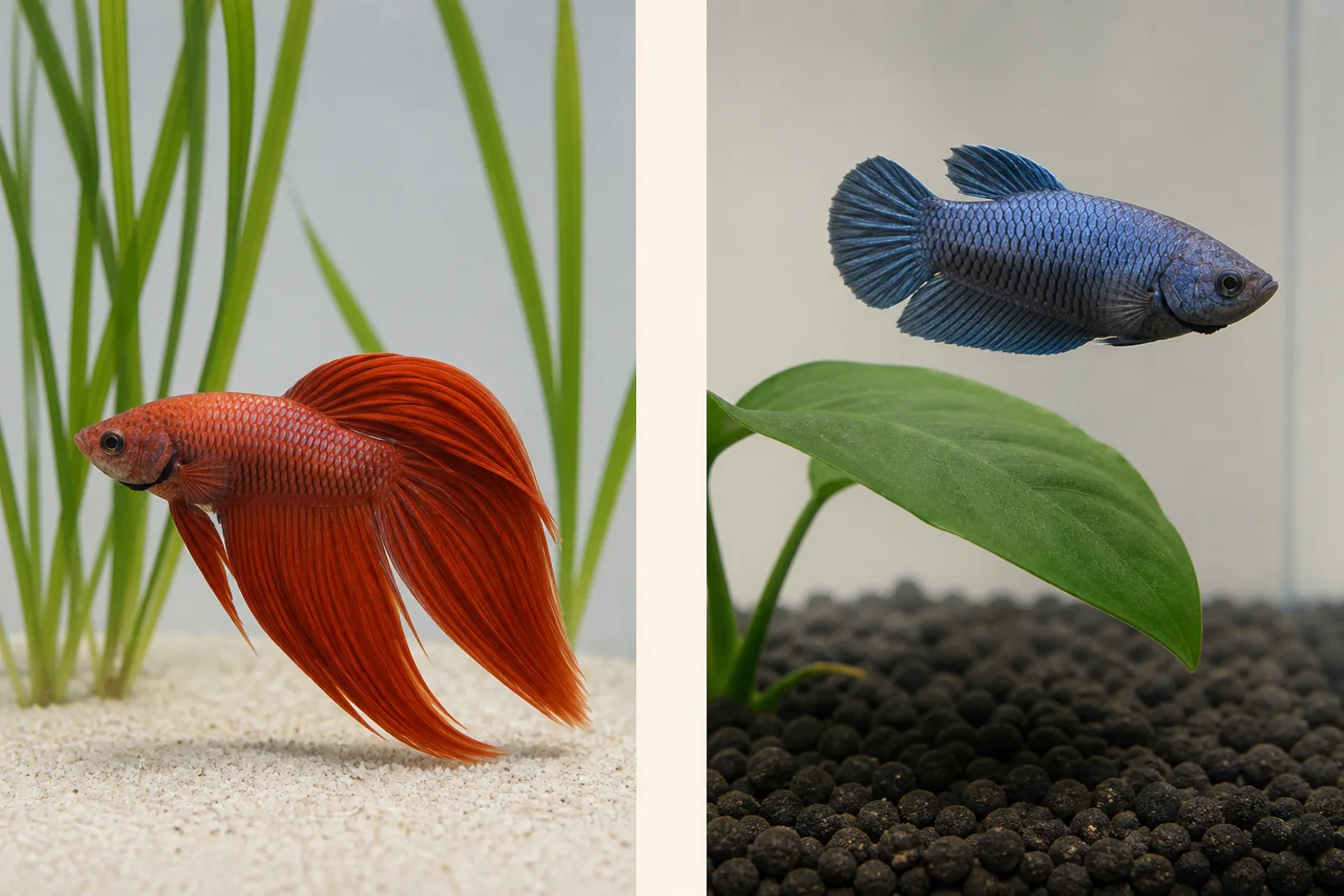
The fish in the cup with the trailing fins is almost always male. That is the whole identification most people need, and the shop stocks males because they photograph better.
Females are worth considering, and the care sheet does not change.
Telling them apart
| Feature | Male | Female |
|---|---|---|
| Dorsal, anal and caudal fins | Long, trailing | Short |
| Body | Slimmer, more elongated | Deeper, rounder belly |
| Ovipositor spot | Absent | Small white spot behind ventral fins |
| Beard under the gill plate | Prominent when flaring | Small or not visible |
| Colour | Usually more intense | Often more muted, varies by strain |
| Bubble nest building | Common | Occasional, less structured |
Adults are straightforward. Juveniles are genuinely difficult, and a young fish sold as one sex sometimes turns out to be the other. Plakat males have short fins too, which is the usual cause of a confident misidentification.
The aggression myth
Female bettas are not peaceful. They flare, they chase, and they bite.
The difference is visibility. A male with a torn caudal fin looks damaged for weeks. A female with the same bite heals faster and looks fine, so the fighting gets underestimated.
Two females in a small tank will fight. A female and a male will fight, and the male usually wins. Neither combination belongs in a five or ten gallon.
What is the same
Everything that matters. Five gallon minimum and ten preferred, 25 to 28 degrees Celsius, gentle filtration, a fitted lid, a carnivore pellet diet, weekly water changes, ammonia and nitrite at zero.
There is no separate female care sheet. Anyone selling you one is selling you a smaller tank.
What is slightly different
Females swim better. Short fins are less load, so a female handles a bit more flow and moves more actively around the tank.
Females sometimes carry eggs whether or not a male is present, which shows as a fuller belly and resolves on its own. It is not bloating and does not need treating.
Colour on females is often subtler, which some keepers prefer and some do not.
Sororities
A sorority is five or more females in a heavily planted tank, usually twenty gallons and up, with broken sight lines and dense cover.
They can work. They also collapse, sometimes after months of apparent stability, usually when one fish starts establishing rank. Anyone running one needs a second cycled tank standing ready to separate fish into.
If this is your first betta, keep one fish. The sorority is a project for later, if at all.
Where to go next
The types pillar covers the tail and colour varieties you will actually see in shops, and the selection guide covers what a healthy fish looks like in the cup.