
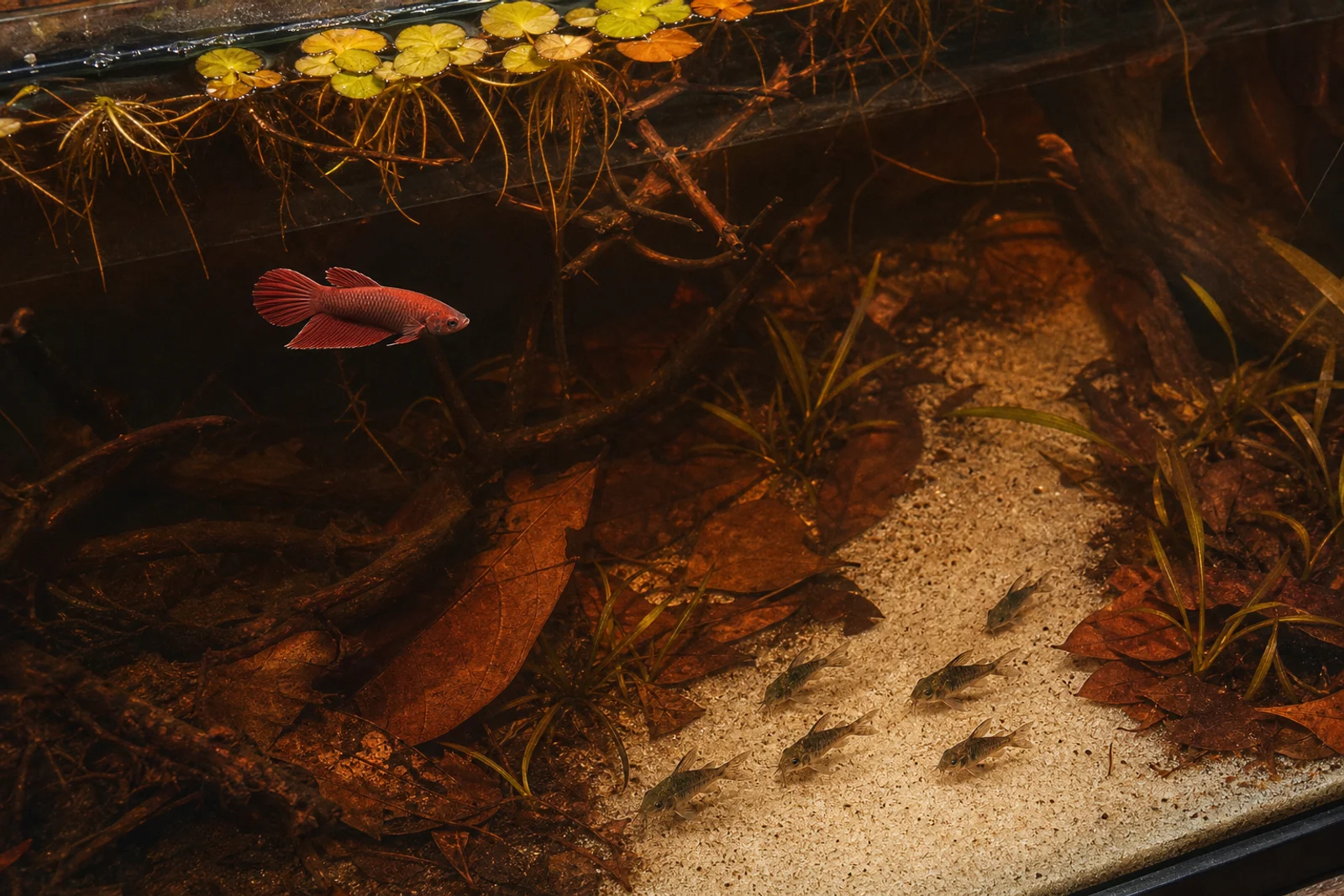
The honest answer to “what can live with my betta” is: possibly nothing, and that is a perfectly good outcome.
Bettas are territorial. Some tolerate company well, some tolerate it until they mature, and some never will. No species list can tell you which one you bought, which is why every recommendation here comes with a way out.
Before you consider any tank mate
Three things have to be true, and if any is missing the answer is no.
The tank is at least ten gallons. Five gallons is enough for one betta and not enough to hold two territories.
The tank is cycled and stable. Adding fish to an uncycled tank harms both of them, and the betta gets blamed.
You have somewhere to put whichever fish loses. A second cycled tank, or at minimum a divider and a plan. Working this out after aggression starts is how fish die.
What tends to work
| Tank mate | Odds | Notes |
|---|---|---|
| Nerite snails | Very good | No fins to nip, no interest in the betta. Will not breed in fresh water |
| Mystery snails | Good | Larger, so antennae occasionally get nipped |
| Amano shrimp | Reasonable | Big enough to be ignored more often than cherry shrimp |
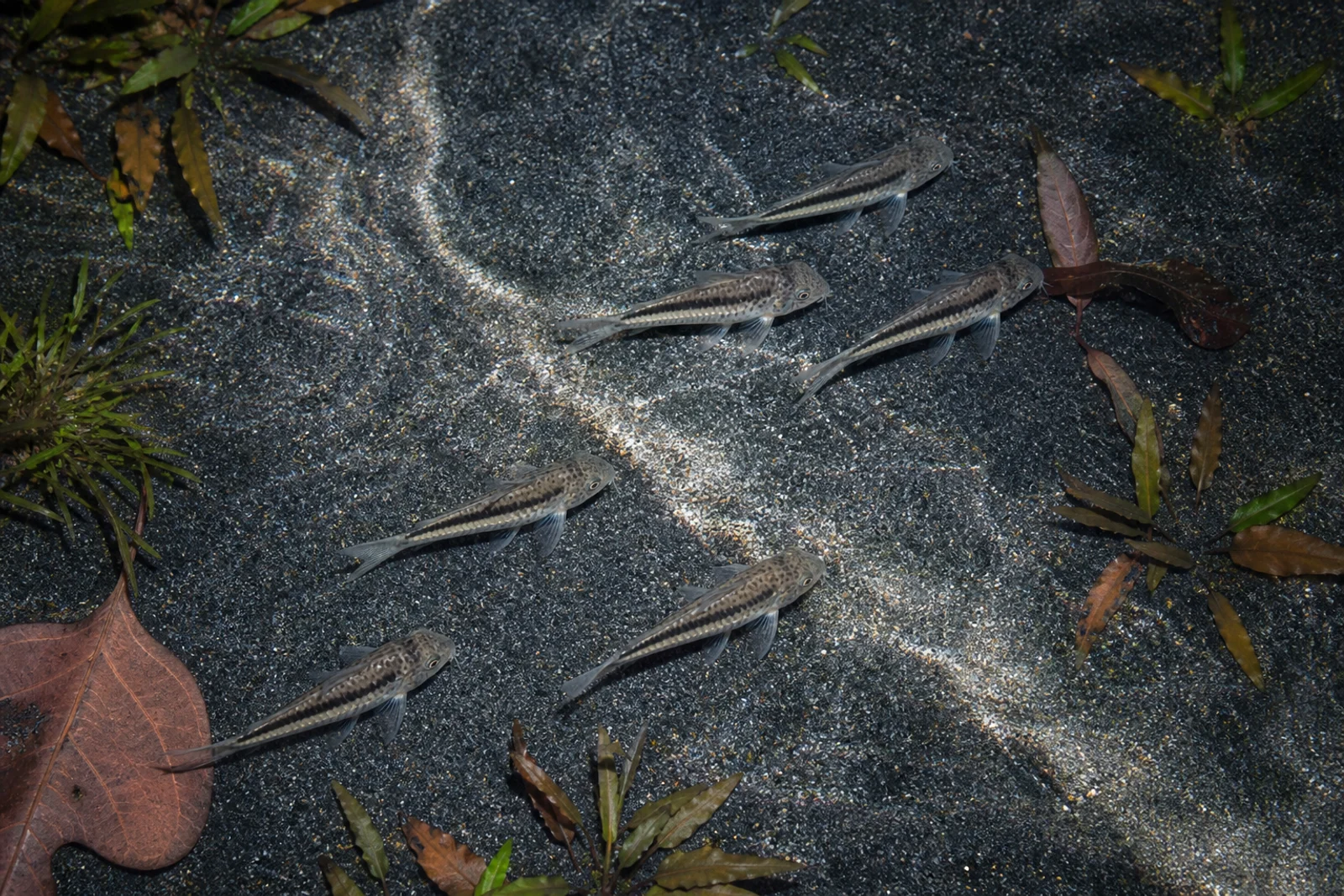
| Pygmy corydoras | Reasonable | Stay low, shoal, need a group of six or more |
| Kuhli loaches | Reasonable | Bottom dwellers, mostly hidden. Need soft substrate |
| Ember tetras | Mixed | Small, calm, but a shoal in the mid water can provoke |
| Otocinclus | Mixed | Peaceful algae eaters, but need mature tanks and a group |
Notice how much of that column says reasonable or mixed. That is the honest picture. A well-chosen tank mate is a reduced risk, not a safe one.
What reliably fails
Anything with long or flowing fins reads as a rival, and guppies are the classic mistake for exactly that reason. Anything brightly coloured has the same problem.
Fin nippers are the other direction of failure. Tiger barbs, serpae tetras and most barbs will shred a betta’s fins faster than a betta can retaliate.
Then there are the fish that need something different from the water: goldfish want it cold, most cichlids want more space and a different temperament, and anything large enough to eat a betta obviously will.
And a second betta, which is the top of the list and worth repeating.
Sororities
A group of female bettas kept together. It is talked about as a beginner-friendly alternative to a single male, and it is not.
Sororities need a large, heavily planted tank, a group of five or more so aggression spreads rather than focusing on one fish, close monitoring, and a genuine plan for breaking the group up. They fail regularly, sometimes months in, and the failure mode is a fish being killed.
If you want several bettas, several tanks is the reliable answer.
Adding a tank mate
- Quarantine the new arrival separately for two to four weeks. Adding disease to a settled tank is the other way this goes wrong.
- Rearrange the decor on the day, so the betta’s territory is not already mapped.
- Add the new fish while the betta is distracted, ideally just after feeding.
- Watch for the first hour, then check often for a fortnight.
- Separate at the first sign of chasing, flaring that does not settle, or torn fins on either fish.
Flaring in the first hour is normal. Sustained pursuit is not.
The case for one fish
A single betta in a well-planted ten gallon is not a compromise. It is the setup with the fewest ways to fail, the least stress on the animal, and the easiest maintenance.
The pressure to build a community usually comes from us rather than the fish. Bettas are not social animals, and nothing about keeping one alone needs apologising for.
Where to go next
Tank size decides whether any of this is even possible, and it is the thing most often got wrong before a second fish is ever considered.