
Betta spawning is not difficult to trigger. That is the problem.
The pair will usually do their part. What follows is months of work at a scale most people have not pictured, and the fish carry the cost of any gap between the two.
The number that decides everything
A single spawn commonly runs into the hundreds of eggs.
Losses happen at every stage, so nobody raises all of them. Even so, a modest success rate leaves you with far more young bettas than a hobbyist has planned for, and they do not stay small.
The planning question is not how many hatch. It is where each survivor lives at four months old.
Why every male needs his own container
Male bettas become territorial as they mature, from roughly two to three months. Housed together they fight, and long fins turn a scuffle into a serious injury.
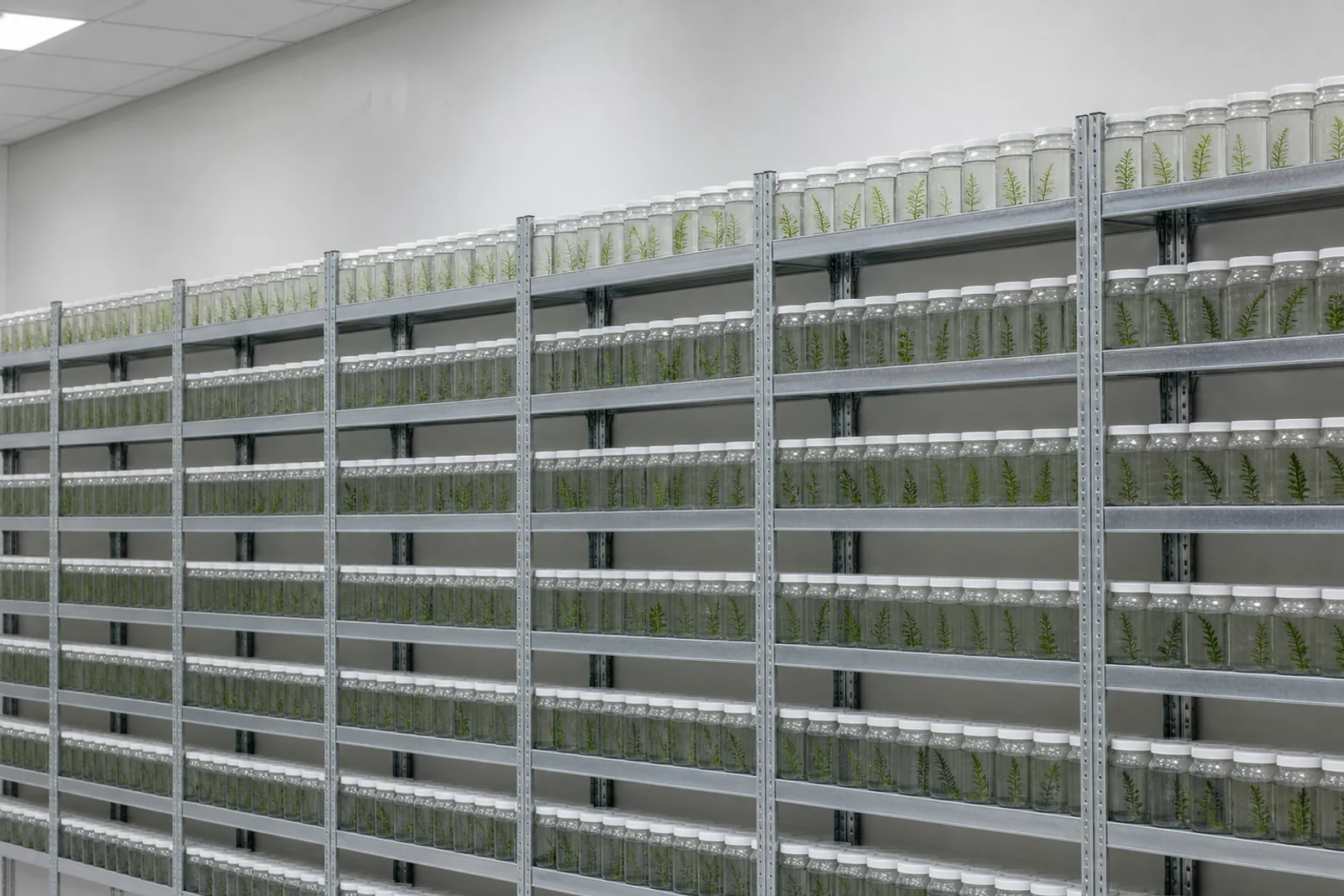
So a rack of individual containers is not an optional refinement of betta breeding. It is the core requirement. Each one needs stable warmth, water changes by hand or a shared filtration system, feeding, and checking. That is a daily routine measured in hours, sustained for months, and it is the point at which most attempts fail.
The picture at the top of this page is the honest one. Not a bubble nest, a shelf of jars.
What the process needs, in outline
Not a recipe. A list of what has to exist before you start.
| Requirement | Why |
|---|---|
| Conditioning space | The pair are kept apart and well fed beforehand, in sight of each other |
| A shallow spawning tank | Warm, low water level, cover for the female, no filter flow |
| An escape route for the female | She is removed straight after spawning or she gets injured |
| A separate recovery tank | She will usually have damage to heal |
| Live food cultures, already running | Fry cannot eat prepared food at first |
| A grow-out tank | Bare, heated, with gentle filtration and daily water changes |
| Individual containers, many | From two to three months, for every male |
| Somewhere for the fish to go | Shops rarely take unsolicited stock |
| Time, daily, for months | Water changes and feeds do not pause |
Missing any single line on that list turns a spawn into a problem you solve under time pressure, with living animals.
The fry stage, briefly
Fry hatch and hang from the nest for a few days, absorbing their yolk sac, guarded by the male. Once they are free-swimming they need food immediately, and they are too small for anything prepared.
That means live microscopic food, infusoria or vinegar eels, then microworms and baby brine shrimp as they grow. Those cultures take days to weeks to establish and they can crash, so breeders run backups.
Fry also need very clean water and no meaningful current, which means frequent small manual water changes in a bare tank rather than filtration doing the work.
Growth is uneven, and larger fry will bully or eat smaller ones, so sorting by size starts early.
The part that gets left out of guides
Not every fish in a spawn is viable. Deformities, failures to thrive and fish that cannot swim or feed properly occur, and every breeder deals with that outcome. It is discussed openly in breeder communities and quietly omitted from most beginner articles, which is one of the reasons those articles are misleading about what the undertaking involves.
You should know that before you spawn a pair, not after.
Why this page is not a how-to
The mechanics of spawning bettas are easy to write down and easy to follow. The infrastructure behind them is neither.
A clear step-by-step guide, published where anyone can find it, mostly produces spawns from people who have the pair and not the twenty containers. The fish absorb that difference. Since this site argues that a single betta deserves five gallons and a heater, publishing something that predictably results in fifty bettas in cups would contradict everything else on it.
So the outline above is deliberate. It is enough to judge whether you are equipped and not enough to improvise with.
If you are equipped, and genuinely want to do this, go to the people who do it properly. Established betta breeder forums and the International Betta Congress community will tell you far more than we can, and they will be honest with you about the workload.
If you were hoping for a project
Two suggestions that scale to a normal home.
Keep one betta properly, in a planted ten gallon with stable heat, and learn to read the fish. That is a longer and more interesting project than most people expect.
Or take on a shop fish in poor condition and bring it back. There is no shortage of those, the skill involved is real, and at the end of it you have one fish rather than a hundred.
Where to go next
The types pillar covers the varieties you will see in shops, and the male and female guide covers why sororities and mixed housing carry their own risks.