
Yes. But not for the reason most people assume.
A filter is not primarily there to make the water look clear. It is there to hold the bacteria that turn ammonia into something less lethal, and that colony needs a surface to live on with water moving through it. Clear water is a pleasant side effect of a working filter, not its purpose.
What a filter actually does
Three jobs, in descending order of how much they matter.
| Job | What it does | How much it matters |
|---|---|---|
| Biological | Bacteria convert ammonia to nitrite, then to nitrate | Almost all of it |
| Mechanical | Traps debris so it can be removed rather than rotting | Useful |
| Chemical | Carbon pulls out specific compounds | Optional, and remove it when medicating |
The biological job is the one that keeps a fish alive. Without an established colony, waste accumulates until it burns the gills and fins.
If you take one thing from this: the filter is the house, and the cycle grows the tenants. New equipment in an uncycled tank protects nothing at all.
Why flow is the betta-specific problem
Bettas come from still, shallow water. They are weak swimmers carrying a lot of fin, and a current that a tetra would enjoy is work for them.
Signs the flow is winning:
- Pushed sideways whenever it stops swimming
- Holding itself against the glass or the substrate
- Hiding permanently in the one corner with least movement
- Struggling to reach the surface to breathe
A betta should be able to hold position anywhere in the tank without effort. If it cannot, the filter needs softening rather than the fish needing to adapt.
Choosing one
| Type | Suits a betta | Why |
|---|---|---|
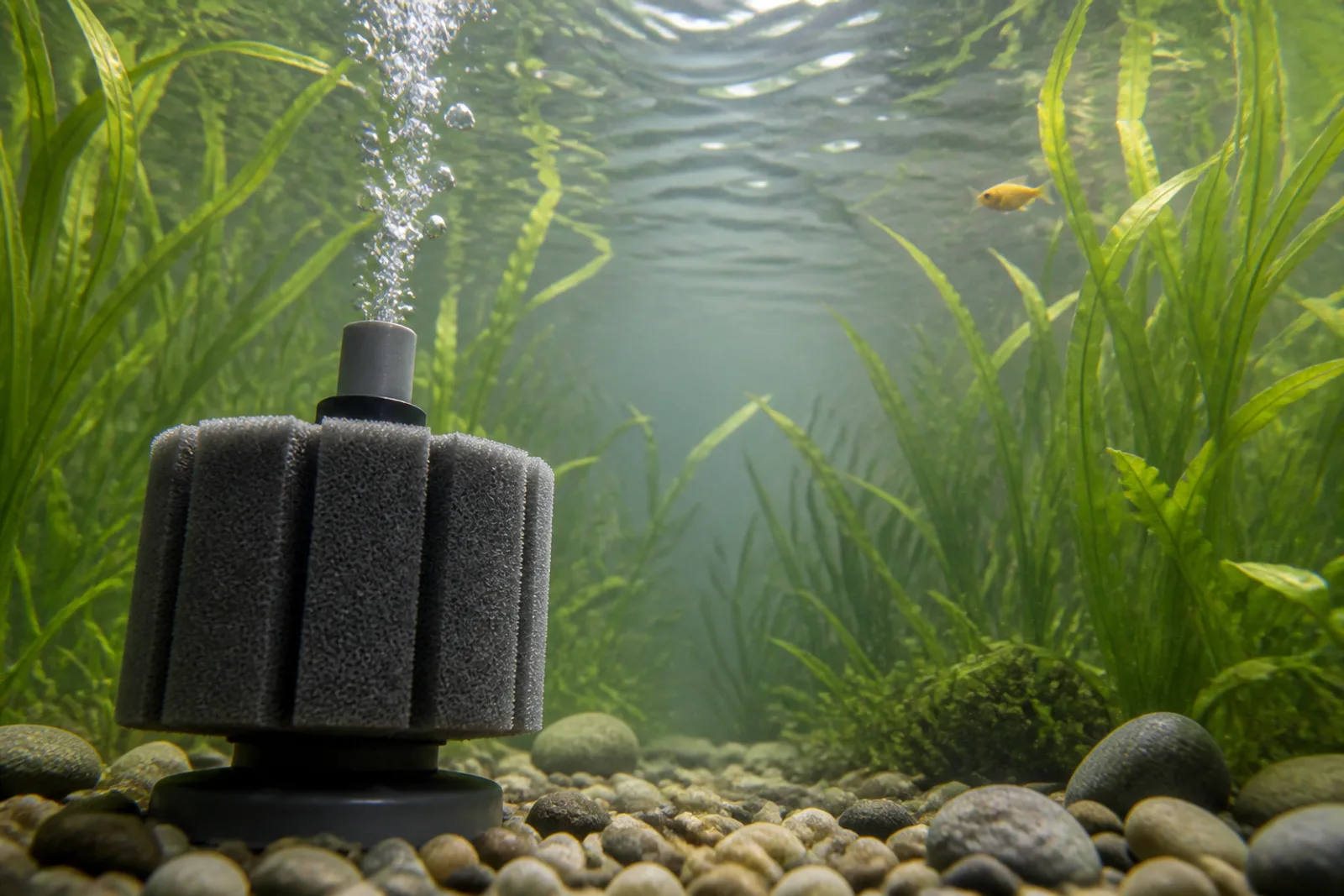
| Sponge filter | Best default | Huge bacterial surface, almost no current, no intake to trap fins |
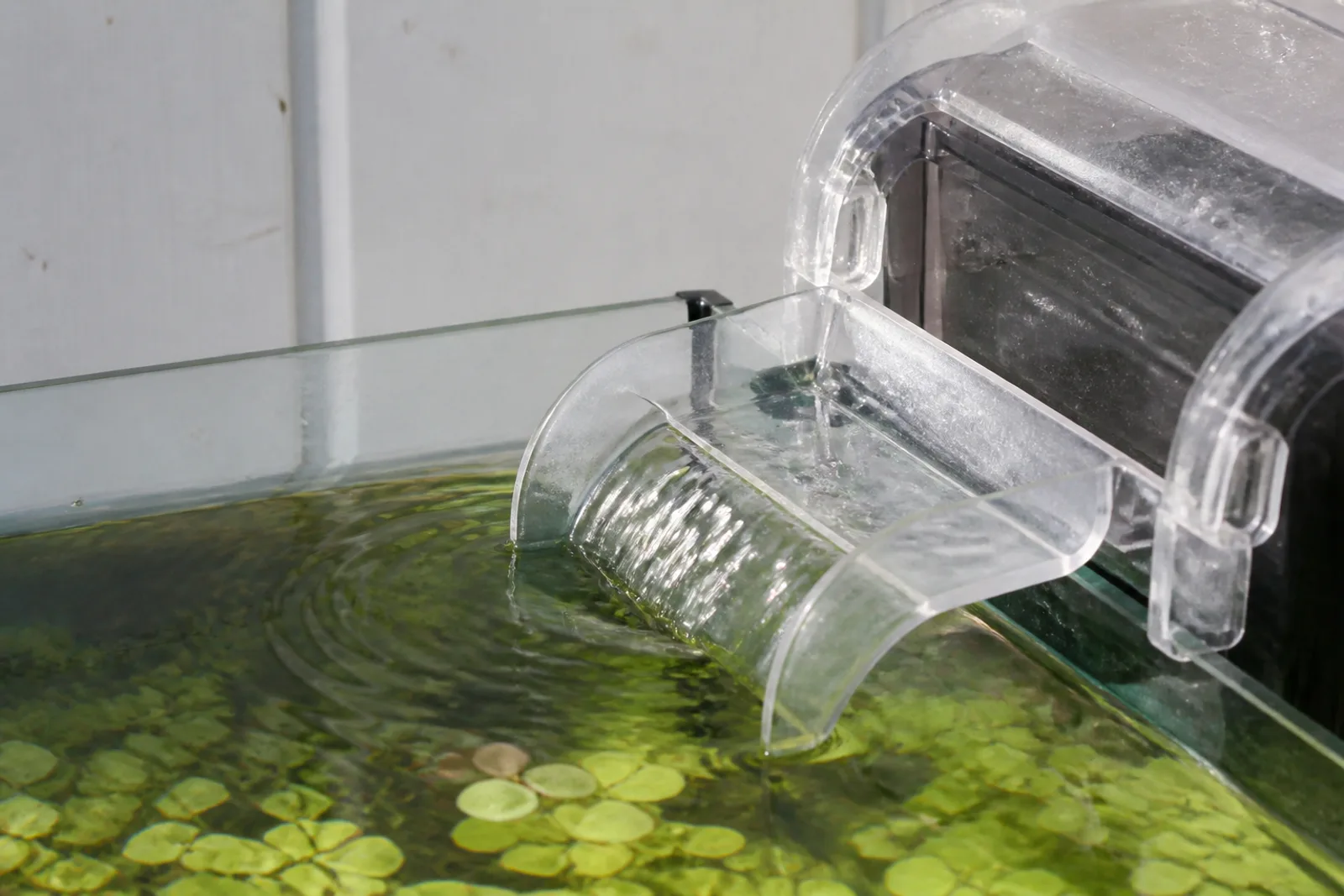
| Hang-on-back | Workable | Good biological capacity, but needs the outflow baffled |
| Internal box | Workable | Compact, adjustable on some models, watch the intake |
| Canister | Overkill | Fine on larger tanks, far more flow than needed |
| Undergravel | Avoid | Outdated, awkward to maintain, poor biological performance |
A sponge filter driven by a small air pump is the answer for most betta tanks. It is cheap, quiet enough, impossible to get caught in, and it produces the gentlest current of anything on that list.
The one drawback is that it needs an air pump, which sits outside the tank and makes a low hum. Some people mind that. It is worth minding less than a fish fighting current all day.
Softening the flow
Cheapest first:
- Aim the outflow at the glass wall rather than out into the tank, so the energy dissipates before it reaches the fish.
- Cut a section of plastic bottle and clip it over the outflow as a baffle, spreading the water sideways.
- Add a pre-filter sponge over the intake, which reduces flow slightly and stops fins being pulled against it.
- Wedge filter foam loosely in the outflow. Effective, and it needs rinsing more often.
- Replace the filter with a sponge model if none of the above is enough.
Maintaining it without destroying the cycle
This is where most filters get ruined by good intentions.
Rinse media only in water you have just removed from the tank. Tap water contains chlorine, chlorine kills the bacteria, and a tank whose colony has been wiped out is an uncycled tank with a fish already in it.
Replace media as rarely as you can. If a cartridge must be swapped, run the old and new together for a few weeks so the colony transfers. Throwing out a mature cartridge and dropping in a fresh one is the same mistake in a different form.
Never turn the filter off overnight. The bacteria need oxygenated water flowing through them and start dying within hours.
Filterless keeping
It is possible, and it is not a shortcut. A filterless tank means you are the filter: large water changes every day or two, tested rather than guessed, forever.
Heavily planted tanks handle some of the load, and plants do consume nitrogen. They do not replace the bacterial conversion of ammonia, and a planted filterless tank still needs the same testing discipline.
For a first betta, use a filter. Filterless is an experienced keeper’s choice made deliberately, not a way to spend less.
Where to go next
A filter with no established colony does nothing, so cycling is the step that makes the equipment worth having.