
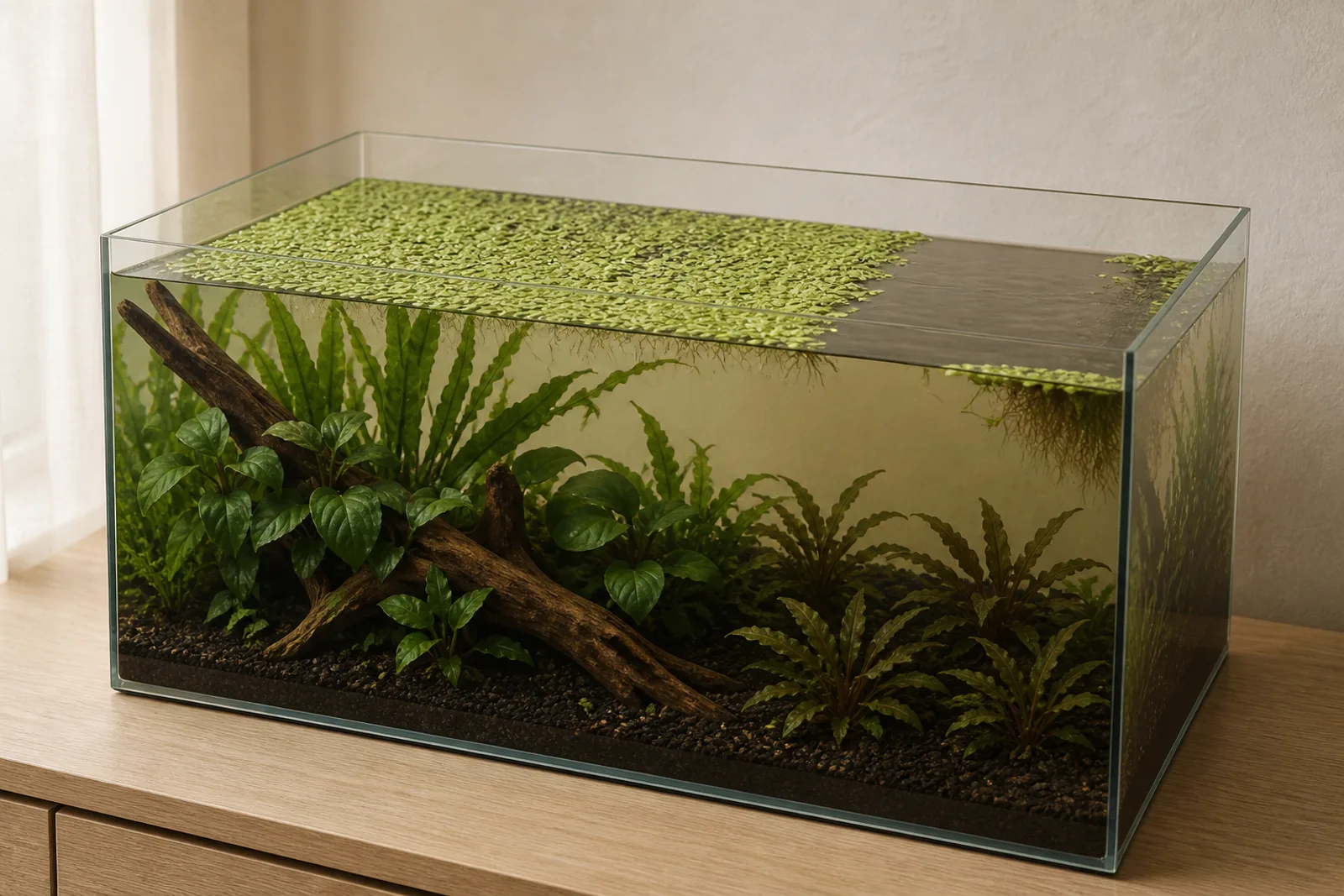
Plants are the cheapest upgrade a betta tank gets. They give cover, they take up some nitrate, and they turn a glass box into somewhere a fish will actually use.
They are also where beginners waste the most money, usually on species that were never going to survive the lighting.
Six that work
| Plant | Where it goes | Notes |
|---|---|---|
| Anubias | Tied to wood or rock | Very slow, very hard to kill |
| Java fern | Tied to wood or rock | Same rule, taller leaves |
| Cryptocoryne | Rooted in substrate | Melts on arrival, then regrows |
| Java moss | Anywhere, tied or loose | Good cover for shrimp |
| Amazon frogbit | Floating | Broad leaves, long roots |
| Hornwort | Floating or weighted | Grows fast, soaks up nitrate |
None of these need added carbon dioxide, a fertiliser routine, or a strong light. They need water, a modest light for six to eight hours a day, and to be left alone.
The two mistakes
Burying the rhizome. Anubias and java fern grow from a thick horizontal stem. That stem must sit in open water, tied to wood or rock with thread or glued with a gel superglue. Push it into gravel and it rots from the middle out. This is the single most common reason a new plant dies.
Panicking when a crypt melts. Cryptocoryne routinely drops every leaf after a move as it adapts to new water. It looks dead. Leave the roots in place and it regrows within a few weeks.
What plants do for the fish
A betta with heavy fins is a poor swimmer and spends a lot of the day resting. Broad leaves in the upper third of the tank give it somewhere to sit close to the surface, which is where it wants to be because that is where it breathes.
Floating plants dim the light. Bettas come from shaded, vegetated water and a brightly lit bare tank is stressful. Dimmer light also slows algae.
Dense planting breaks up sight lines, which matters if there is anything else in the tank and matters even in a solo tank because the fish can choose not to be visible.
What plants do not do
They do not replace water changes. A well-planted tank has slightly lower nitrate and the same weekly routine.
They do not cycle a tank. Bacteria do that, and plants arriving in a new tank sometimes bring a few along but never enough to count on.
They do not make a small tank adequate. Five gallons planted is still five gallons.
A simple starting layout
Anubias on a piece of driftwood in the middle. Java fern behind it against the back glass. A handful of crypts in the substrate on one side. Frogbit floating across about half the surface, leaving the rest clear so you can see in and the fish has an open route to air.
That is roughly twenty dollars of plants and it will still be there in two years.
Where to go next
The setup pillar covers where planting fits in the build order, and why the hardscape goes in before the water does.