
The first two days are mostly about restraint. Almost everything that goes wrong in a new betta tank in this window comes from doing too much rather than too little.
Before the fish is in the car
The tank should already be running. Cycled, heated, filtered, planted, lid fitted, and stable for weeks. If it is not, read the cycling guide before you read this one, because nothing below fixes an uncycled tank.
Check the thermometer on the morning of the trip. Have a net ready and a container for the bag water.
Hour one
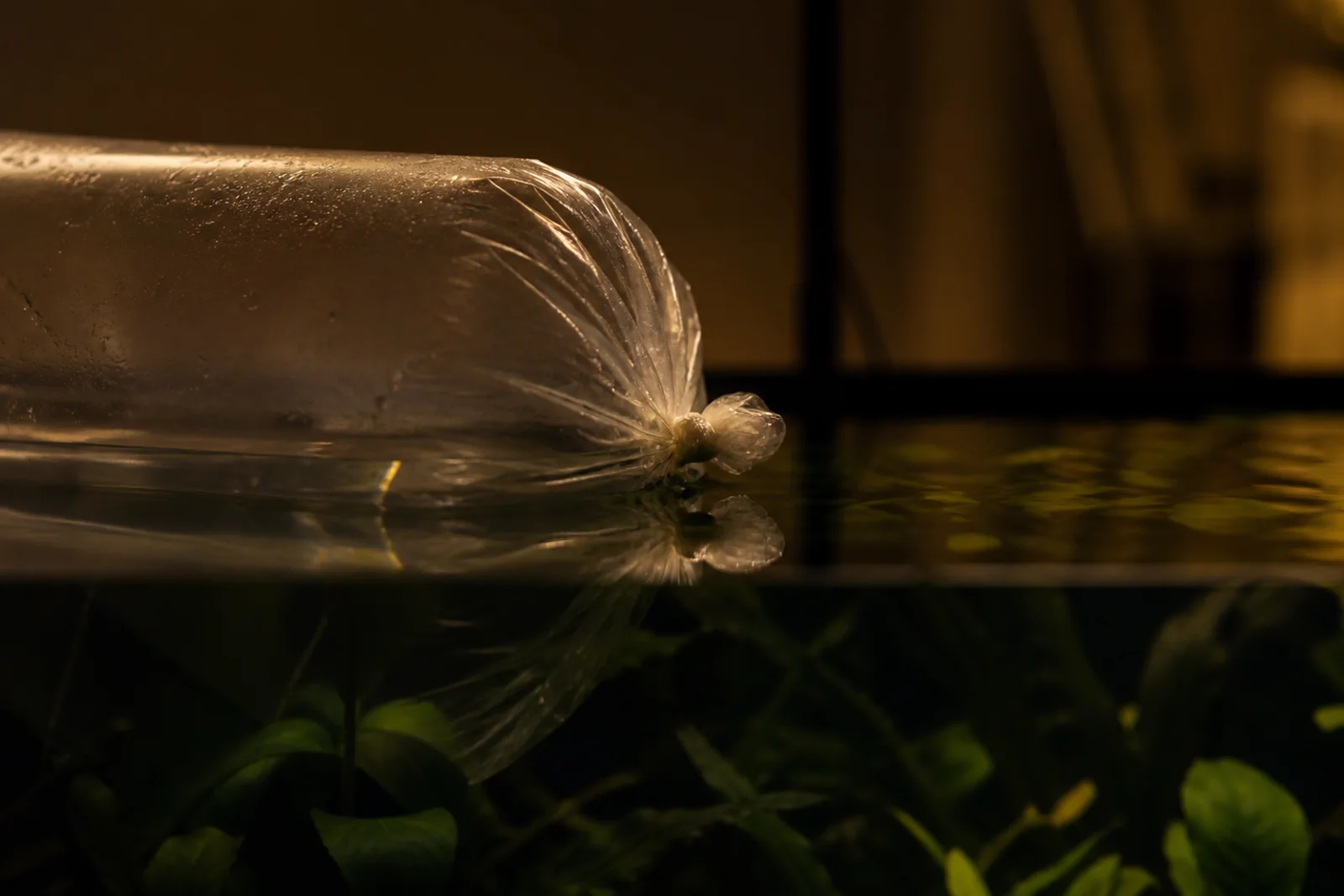
- Float the sealed bag on the surface for 15 to 20 minutes so the temperatures converge. Keep the tank light off.
- Open the bag and add a small amount of tank water to it every five minutes for about half an hour, so the chemistry shifts gradually rather than all at once.
- Net the fish out of the bag and into the tank.
- Pour the bag water down the sink. It came from a shop system and there is no reason to introduce it.
- Leave the light off for the rest of the day.
That is the whole procedure. It takes about 45 minutes, most of which is waiting.
The rest of day one
Do nothing.
No food. A fish that has just been bagged, driven and released will not eat, and uneaten food breaks down into ammonia in a tank that is now carrying a fish for the first time.
No visitors at the glass. No photographs with a flash. No rearranging the decor to make it look better. No testing every hour.
Day two
Offer two or three pellets once. If they are ignored, remove them after a couple of minutes and try again tomorrow. Refusing food for the first few days is common and not a symptom on its own.
Read the thermometer. Look at the fish for thirty seconds, from a normal distance rather than pressed against the glass.
That is all.
What is normal in this window
| Behaviour | Reading |
|---|---|
| Hiding behind decor or the filter | Normal. It is a new territory |
| Refusing food for two or three days | Normal after a move |
| Colour looking duller than in the shop | Usually stress, plus flattering shop lighting |
| Lying still on a leaf or the substrate | Normal. Bettas rest lying down |
| Sitting near the surface | Normal, they breathe air |
| Fins held clamped | Watch it. Common on arrival, should ease within days |
What is not normal
Gasping at the surface without settling, especially with rapid gill movement. Test the water immediately.
Distinct white spots, cottony patches, or fins visibly receding. Read the diseases guide.
Refusing food beyond four or five days while also sitting motionless. Test the water first, then look for a specific sign.
The week after
From day three, feed twice a day, two to four pellets, removing anything uneaten. From the end of the first week, start the weekly routine: test, change about a quarter of the water, wipe the front glass.
Leave tank mates for later, if at all, and quarantine anything new.
Where to go next
The care guide is the hub for everything after this week. The acclimation article covers the temperature and chemistry step in more detail, and the selection guide covers choosing a fish that arrives healthy in the first place.