
Acclimation solves two different problems, and understanding that they are separate is what makes the procedure make sense.
Temperature is one. Chemistry is the other. They move at different speeds and they need different handling.
Temperature, the fast one
Water in a bag cools on the way home. The gap between that bag and your heated tank is frequently four or five degrees, and dropping a fish across it is a shock on its own.
Floating the sealed bag on the tank surface closes that gap in 15 to 20 minutes, with no mixing at all. The bag stays shut, so nothing crosses in either direction.
This part is quick, easy and non-negotiable.
Chemistry, the slow one
pH, hardness and dissolved minerals differ between a shop system and your tank, sometimes considerably. A fish moved abruptly has to adjust its internal balance all at once.
This is the part that needs time, and there are two ways to give it.
Method one: float and add
Suits most purchases and takes about half an hour.
- Float the sealed bag for 15 to 20 minutes.
- Open it and roll the top down so it stays afloat.
- Add a small cup of tank water to the bag every five minutes.
- Keep going for about 30 minutes, until the bag holds roughly twice what it started with.
- Net the fish out and into the tank. Pour the bag water away.
Method two: drip
Slower and gentler. Worth it when the two waters are very different, when the fish has had a long journey, or when it already looks stressed.
- Put the fish and its transport water into a clean container below the tank.
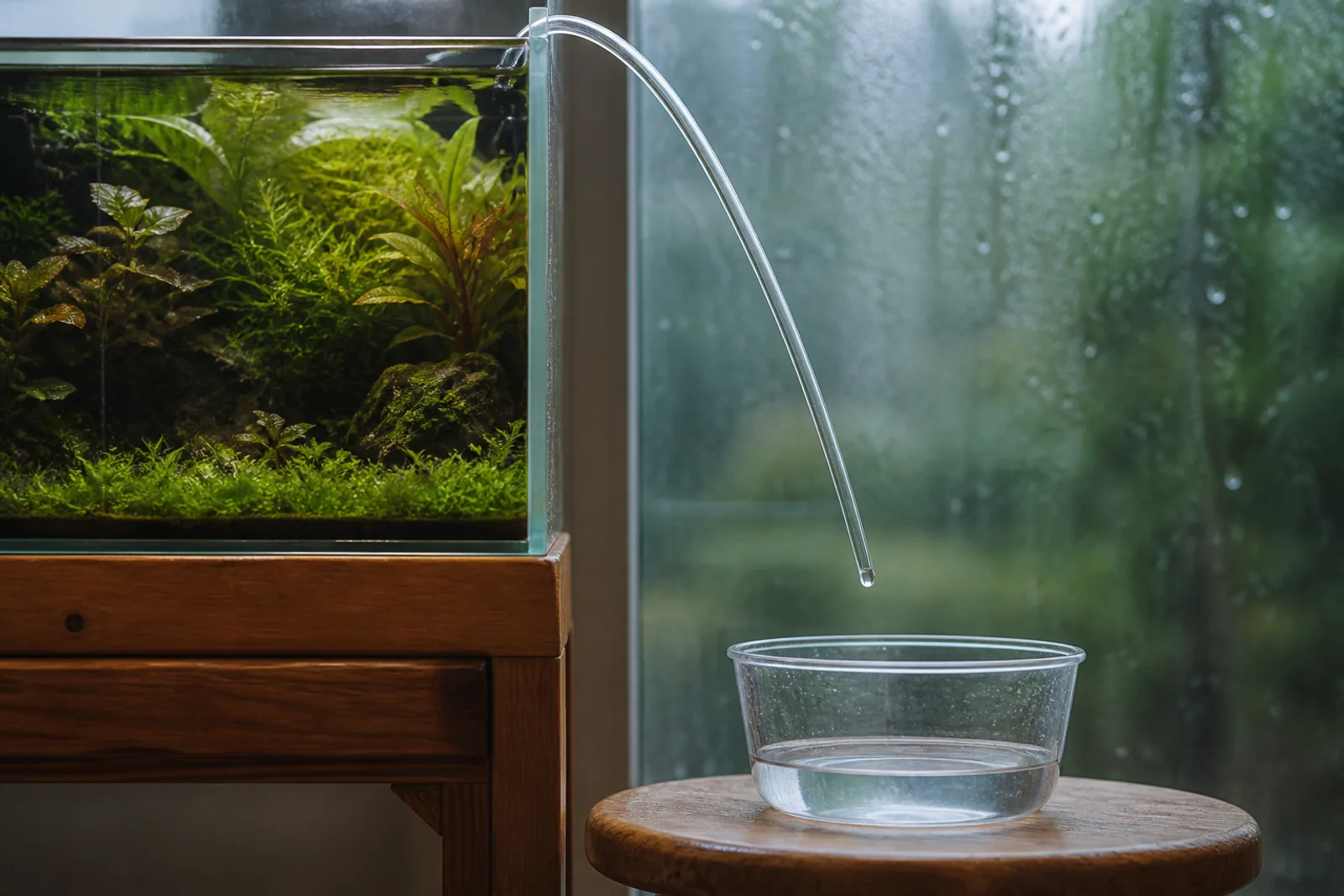
- Run a length of airline tubing from the tank into the container, starting the siphon by mouth or with a pump.
- Tie a loose knot in the tubing to slow it to two or three drips a second.
- Let it run for an hour or more, until the container holds two or three times its starting volume. Pour some off if it threatens to overflow.
- Net the fish across. Discard the container water.
Keep the container warm while this runs, since an hour on a cold worktop undoes the temperature work.
The shortcut that kills
Cutting the bag and tipping fish and water together into the tank.
It gives the fish both shocks at once and introduces shop water into a system you have kept clean. It is the most common way a new fish starts badly, and it saves about forty minutes.
It is not only for new fish
Any move deserves the same care. Into a hospital tank, back out of one, or into a holding container during a deep maintenance session.
The hospital tank case is the one most often skipped, because the move feels urgent. A sick fish has less tolerance for a shock than a healthy one, so match the temperature first and use display tank water where you can.
After the fish is in
Lights off. No food that day. Leave it alone.
Hiding, dull colour and refusing food for two or three days is a normal response to a move. Gasping at the surface, rapid gill movement or lying on its side is not, and means testing the water.
Where to go next
The first 48 hours guide covers everything around this step on arrival day. The quarantine guide covers where a new fish should be going first, and the water parameters guide covers what you are matching it to.