
Ammonia is the most common cause of death in a home aquarium and it is invisible. The water looks clear, the fish looks tired, and the damage has been accumulating for a week.
If you have a reading above zero, the response starts tonight.
What to do right now
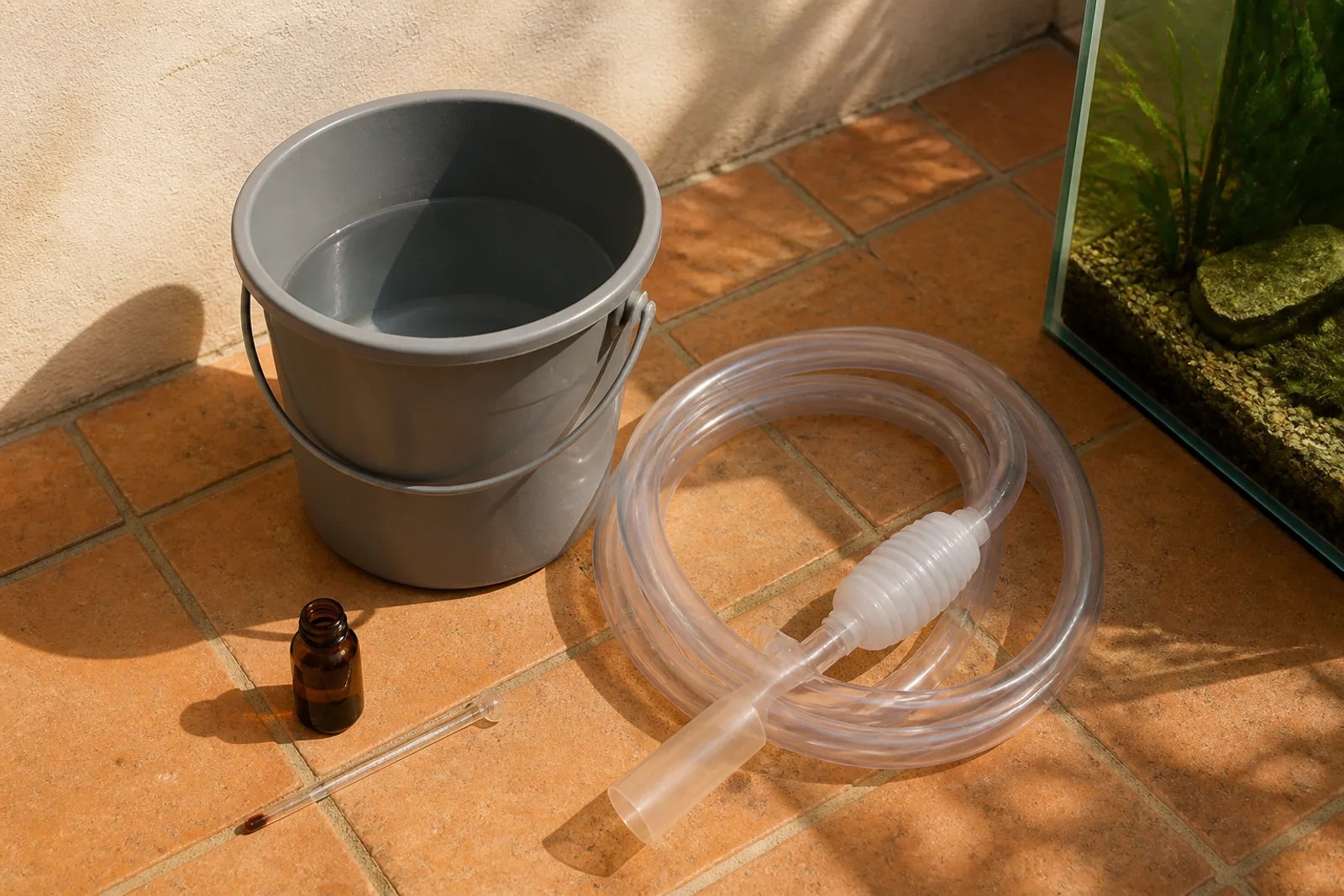
- Change 50 percent of the water. Dechlorinated, matched to tank temperature.
- Stop feeding, or drop to a single pellet a day.
- Test ammonia and nitrite again after 24 hours.
- Repeat the 50 percent change every day until ammonia reads zero.
- Leave the filter completely alone. Do not rinse it, do not change the media.
- Do not add medication. Antibiotics treat bacteria, not chemistry, and the handling and dosing add stress to a fish that has none to spare.
That routine is first aid. It works, and it does not fix the cause.
Why it is more dangerous than the number suggests
Ammonia exists in water in two forms. The ionised form is relatively harmless. The un-ionised form burns tissue, and the proportion in that form rises with both temperature and pH.
A betta tank is warm by definition. So the same 0.5 ppm reading is doing more harm in a 27 degree tank at pH 8 than the number alone implies. This is why generic “acceptable ammonia” charts are misleading and why the target is simply zero.
Recognising the damage
| Sign | Stage |
|---|---|
| Loss of appetite, sitting still | Early, easily missed |
| Clamped fins | Early |
| Gasping at the surface | Gill function is compromised |
| Red or purple gill covers | Visible chemical burn |
| Darkened patches on the body | Longer exposure |
| Ragged, receding fin edges | Longer exposure, often mistaken for fin rot |
That last row causes a lot of wasted money. Fins eroding in an ammonia tank look exactly like fin rot, and antibiotics will not help while the water is still the cause. Clean water is the treatment.
Finding the cause
Almost always one of these:
The tank was never cycled. Stocked on the day it was filled, which is the standard retail experience. It has no bacteria and cannot process waste.
The filter media was rinsed in tap water. Chlorine kills the colony, and the tank reverts to uncycled overnight. Media gets rinsed in removed tank water only.
Overfeeding. Uneaten pellets in the substrate break down into ammonia.
Something died. A snail, a plant mass, an unnoticed second fish.
The filter was off, unplugged or clogged for a day or more. The bacteria need water moving through the media.
After it reads zero
Test daily for another week. Nitrite usually rises next, and it needs the same response for the same reasons.
Then work through cycling properly, because a tank that produced ammonia once will produce it again until the colony is established.
Where to go next
The water parameters pillar covers what every reading means and how often to test. Cycling covers how to stop ammonia appearing in the first place.