
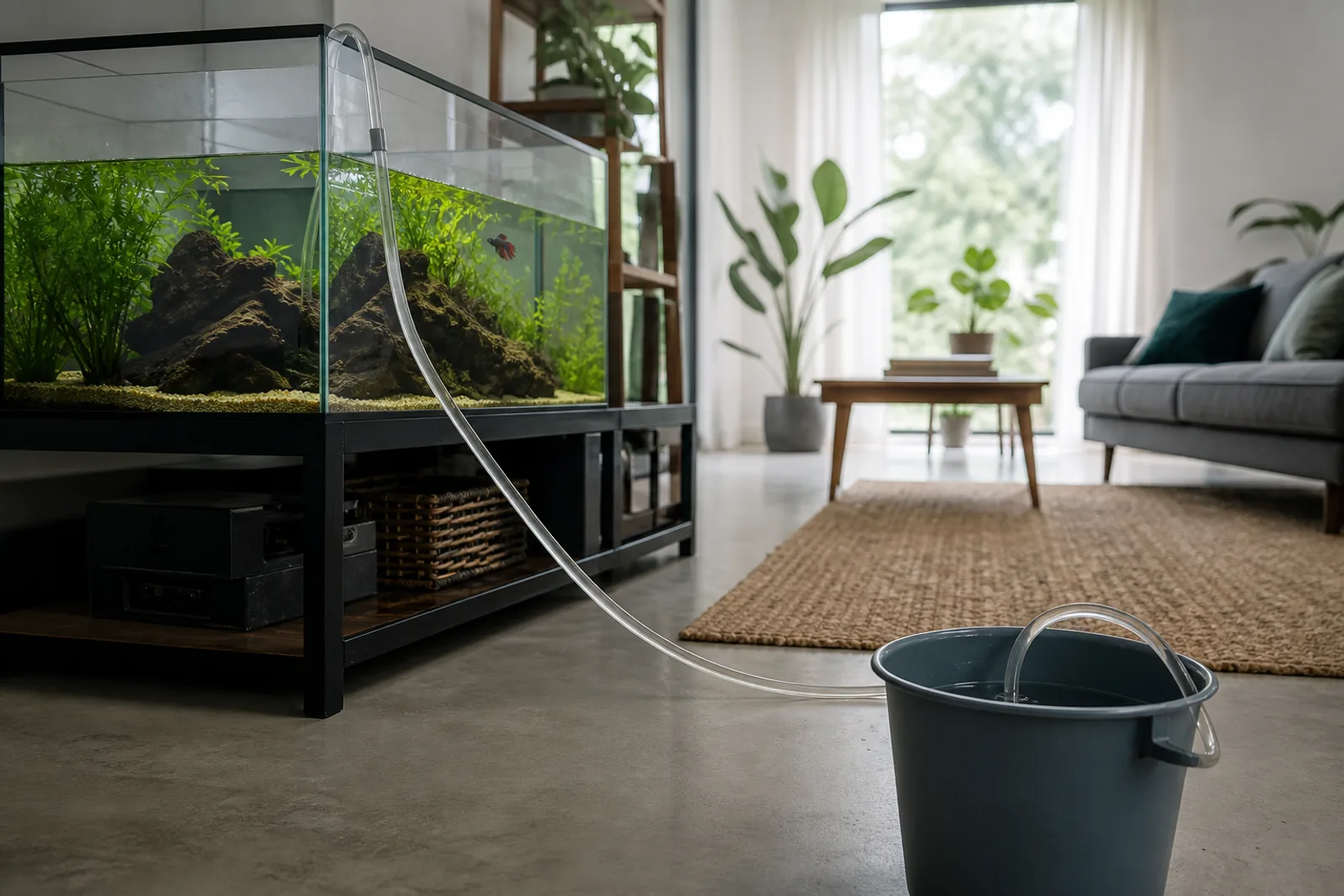
About a quarter of the water, once a week, in a cycled tank. That is the whole routine.
What matters more than the schedule is what you do not do: never change all of it, never refill with untreated tap water, and never use a water change to paper over a tank that was never cycled.
Why water changes exist
In a cycled tank, bacteria convert ammonia to nitrite and nitrite to nitrate. Nothing removes the nitrate. It accumulates.
Water changes are how nitrate leaves. That is the job. They also top up minerals and dilute anything else that has built up, but nitrate export is the reason for the schedule.
This is why a water change is not a treatment for ammonia. If ammonia is present, the cycle is broken, and the change is first aid while you fix the real problem.
How much, how often
| Situation | Volume | Frequency |
|---|---|---|
| Cycled 5 to 10 gallon | 25% | Weekly |
| Cycled and heavily stocked | 25 to 30% | Twice weekly |
| Cycling with a fish present | 25 to 50% | Whenever ammonia or nitrite exceeds 0.25 ppm |
| Nitrate above 20 ppm | 25% | More often, not larger |
| Serious contamination | 50% | Repeated, keeping filter media wet |
The pattern worth internalising: increase frequency before increasing volume. Two 25 percent changes are gentler on the fish than one 50 percent change, and they export the same amount.
The method
- Test first. You are looking for what the tank is doing, not just performing a ritual. Note the numbers.
- Prepare the new water. Fill a clean bucket, add dechlorinator at the stated dose, and bring it to tank temperature. Check with a thermometer.
- Unplug the heater if the level will drop below it.
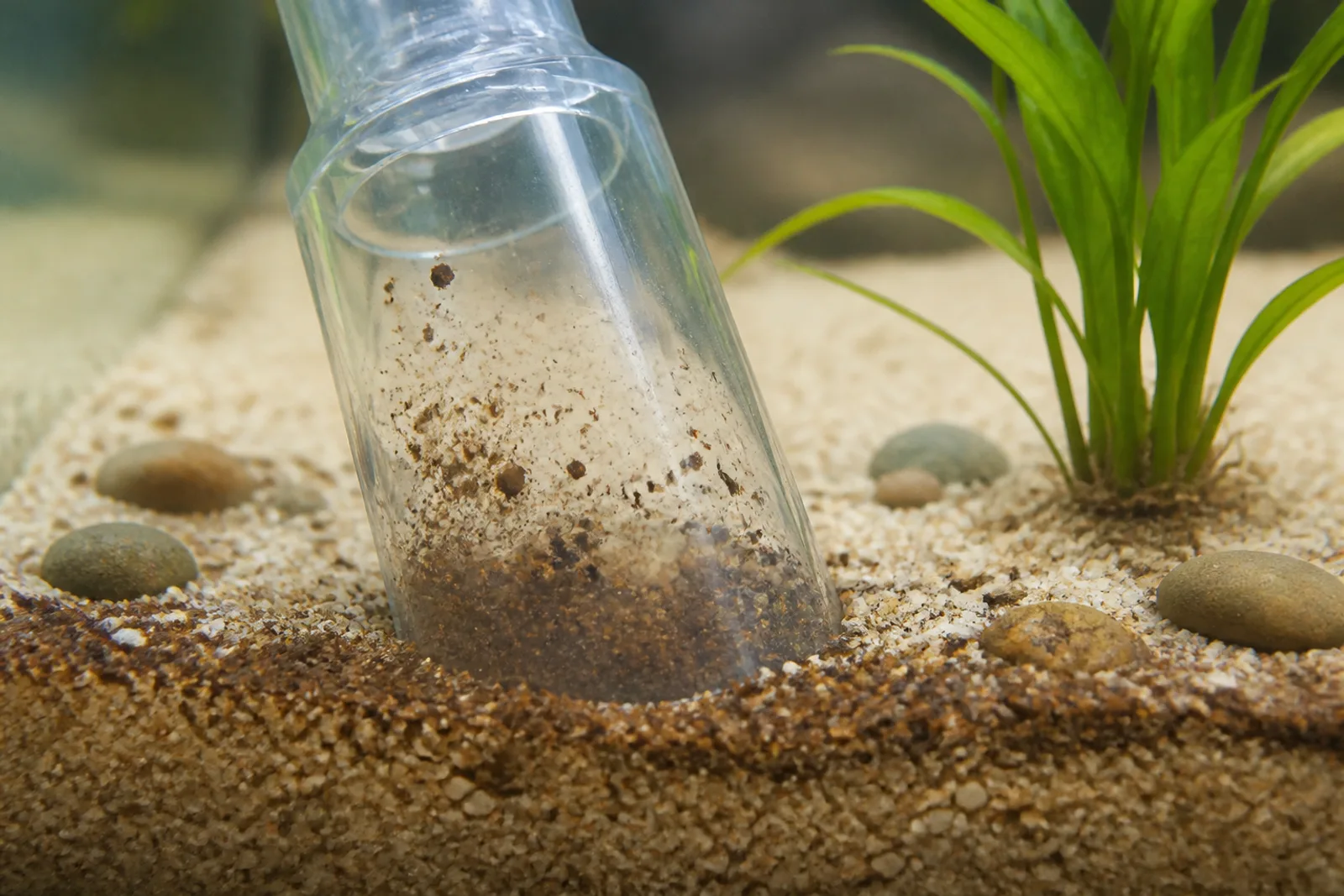
- Siphon from the substrate, not the surface. Waste settles, so pushing the siphon gently into the top layer removes far more than skimming.
- Take out roughly a quarter. Marking the bucket once saves guessing every week.
- Refill slowly, pouring against the glass or onto a plate so you do not dig a crater or blast the plants.
- Plug the heater back in and check the temperature again after an hour.
Leave the fish in the tank throughout. Netting it out is more stressful than anything the water change does.
What not to do
Do not wash the filter media in tap water during the change. Chlorine kills the colony and the tank returns to uncycled.
Do not scrub every surface. Biofilm and darkened media are where the bacteria live, and a tank stripped clean is a tank that has to start again.
Do not rearrange the decor every week. Bettas map their territory, and constant change is a low-grade stressor with no benefit.
Do not add untreated tap water, even a small top-up. Chlorine is harmful at the concentrations found in most supplies.
Evaporation top-ups are not water changes
Water evaporates and minerals stay behind, so topping up with fresh water dilutes nothing and slowly concentrates hardness.
Top up with dechlorinated water to keep the level right, and still do the weekly partial change. They are separate jobs.
When the numbers do not improve
If nitrate stays high after several weeks of consistent changes, more water is rarely the answer. Look at input instead.
Overfeeding is the usual cause, and every uneaten pellet becomes nitrate eventually. Check portion size before changing the schedule. Beyond that, a tank stocked heavier than its volume supports will always outpace a weekly change, and the fix is stocking rather than plumbing.
Where to go next
Knowing what to test and what each reading means is what turns a water change from a chore into a decision.