
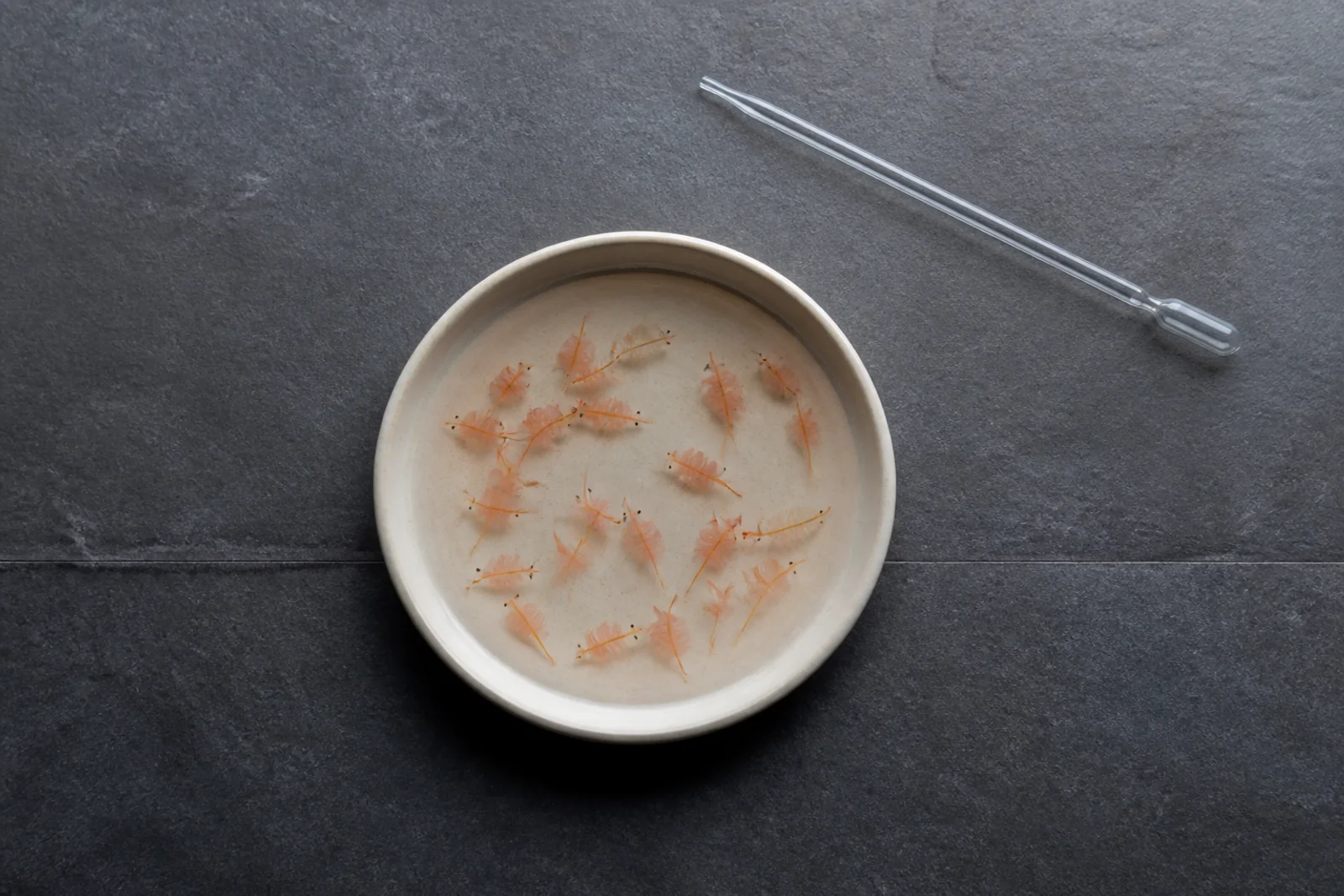
Brine shrimp sit in the same category as bloodworms and daphnia: a food to rotate in, not a food to build a diet on. The difference is that they are lighter than bloodworms, which makes them useful in a specific situation.
What they are worth
Adult brine shrimp are largely water. They deliver less per mouthful than the appearance suggests, and a betta fed only on them over months would be underprovided for.
That is not an argument against using them. It is an argument for what they are good at: adding variety, encouraging a fussy eater, and giving a fish that has been overfed something less dense to work on.
Newly hatched brine shrimp, before they have used up their yolk, are more nutritious than adults. That matters mostly to people raising fry.
Frozen against live
| Frozen | Live | |
|---|---|---|
| Convenience | High | Low |
| Availability | Any aquarium shop | Hatch your own, or a trusted supplier |
| Parasite risk | Low, commercially treated | Depends entirely on the source |
| Nutrition | Good | Better, especially if enriched |
| Stimulation for the fish | Moderate | High, it has to hunt |
| Effort | Minutes | A hatchery and a routine |
Frozen is the sensible default. Live is genuinely better for the fish and it is a project, so take it on if you want the project.
Serving frozen
- Break a small piece off the cube. You need far less than the cube holds.
- Thaw it in a spoon or small dish with a little tank water, a few minutes.
- Lift out a portion with a pipette or tweezers and offer it.
- Pour the remaining thaw liquid away. It is concentrated fluid, not food, and tipping it in adds waste for no benefit.
Never drop a frozen cube straight into the tank. It is cold, it is an enormous portion, and most of it ends up in the substrate.
Portion and frequency
A small pinch, finished within about two minutes, once or twice a week, replacing a regular feed rather than adding to it.
Because the individual shrimp are small, a portion looks generous when it is not, and it is also easy to keep adding because the fish keeps eating. Decide the amount before you start.
Where they fit in the rotation
A reasonable week: pellets twice a day on five days, one fasting day, and one day where a frozen food replaces a feed. Rotate between brine shrimp, daphnia and bloodworms across the weeks rather than settling on one.
Daphnia is the one to reach for if the fish looks constipated. Bloodworms are the richest and the likeliest to cause bloating. Brine shrimp sit between them.
Where to go next
The food pillar covers the whole diet and how to read a label. The bloodworms article covers the richest of the treats, and the portion guide covers how much and how often.