
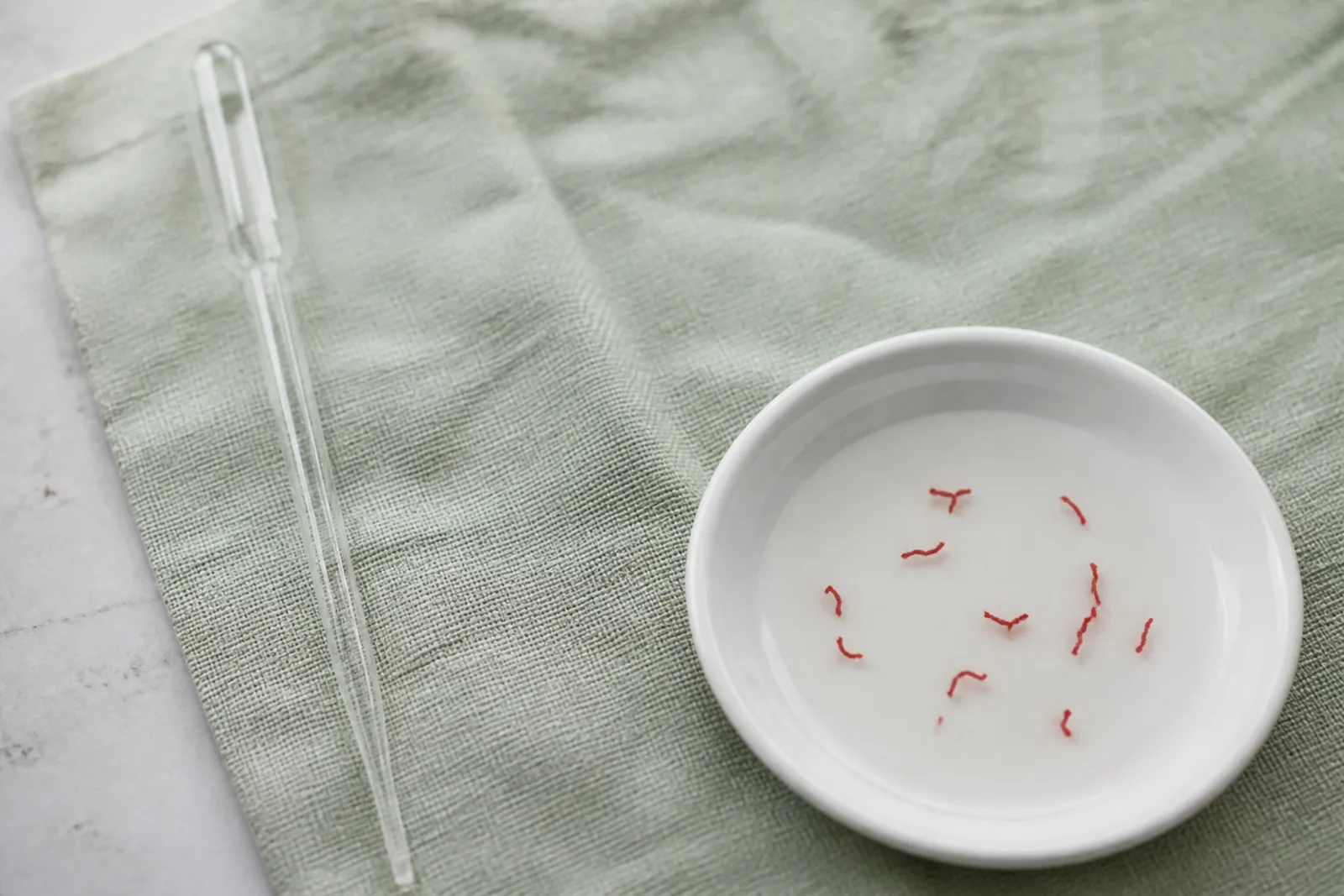
Bettas love bloodworms in a way that makes them look like the correct food. They are not. They are the treat, and the pellet is the meal.
Why they are a treat
Bloodworms are midge larvae. They are high in protein, very palatable, and incomplete: fed on their own they leave gaps that a formulated pellet is designed to fill.
The palatability is its own problem. A betta will keep eating bloodworms well past the point of a sensible portion, and a fish that has learned bloodworms exist sometimes starts refusing pellets. That is a habit, not an illness, and the fix is to stop offering the treat until the pellets get eaten again.
Once or twice a week, replacing one regular feed. Not in addition to it.
Which form to buy
| Form | Verdict |
|---|---|
| Frozen | Best choice. Treated, convenient, easy to portion |
| Freeze-dried | Usable but expands in the gut. Soak first |
| Live | Avoid for a single pet fish. Unknown source, parasite risk |
Freeze-dried is where the bloating stories come from. The worms are dehydrated, so they take up water after being swallowed and swell inside the fish. Soaking a portion in tank water for five minutes before feeding solves it, and most people skip that step.
How to serve frozen bloodworms
- Break off a small piece of the cube. You need far less than the cube contains.
- Put it in a spoon or small dish with a little tank water.
- Wait a few minutes for it to thaw fully.
- Pick out two or three worms with a pipette or tweezers and offer them.
- Pour the rest away. Do not tip the thaw water into the tank; it is concentrated fluid, not food.
Never drop a frozen cube straight into the tank. It is cold, it is far too large a portion, and most of it ends up in the substrate.
Portion and after
Two or three worms for an adult. The belly should look slightly rounded, not distended.
If the fish looks swollen the next day, skip the following feed and go back to a normal pellet portion. Persistent bloating with a fish that cannot stay upright is a different problem and belongs with the swim bladder guidance rather than here.
Alternatives worth rotating
Frozen daphnia is smaller and often helps a slightly constipated fish. Brine shrimp and, for a larger betta, mysis shrimp both work as well. Rotating between them keeps the diet varied and stops the fish fixating on one item.
Where to go next
The feeding pillar covers the whole diet and where each food sits in it, and the portion guide covers how much and how often.