
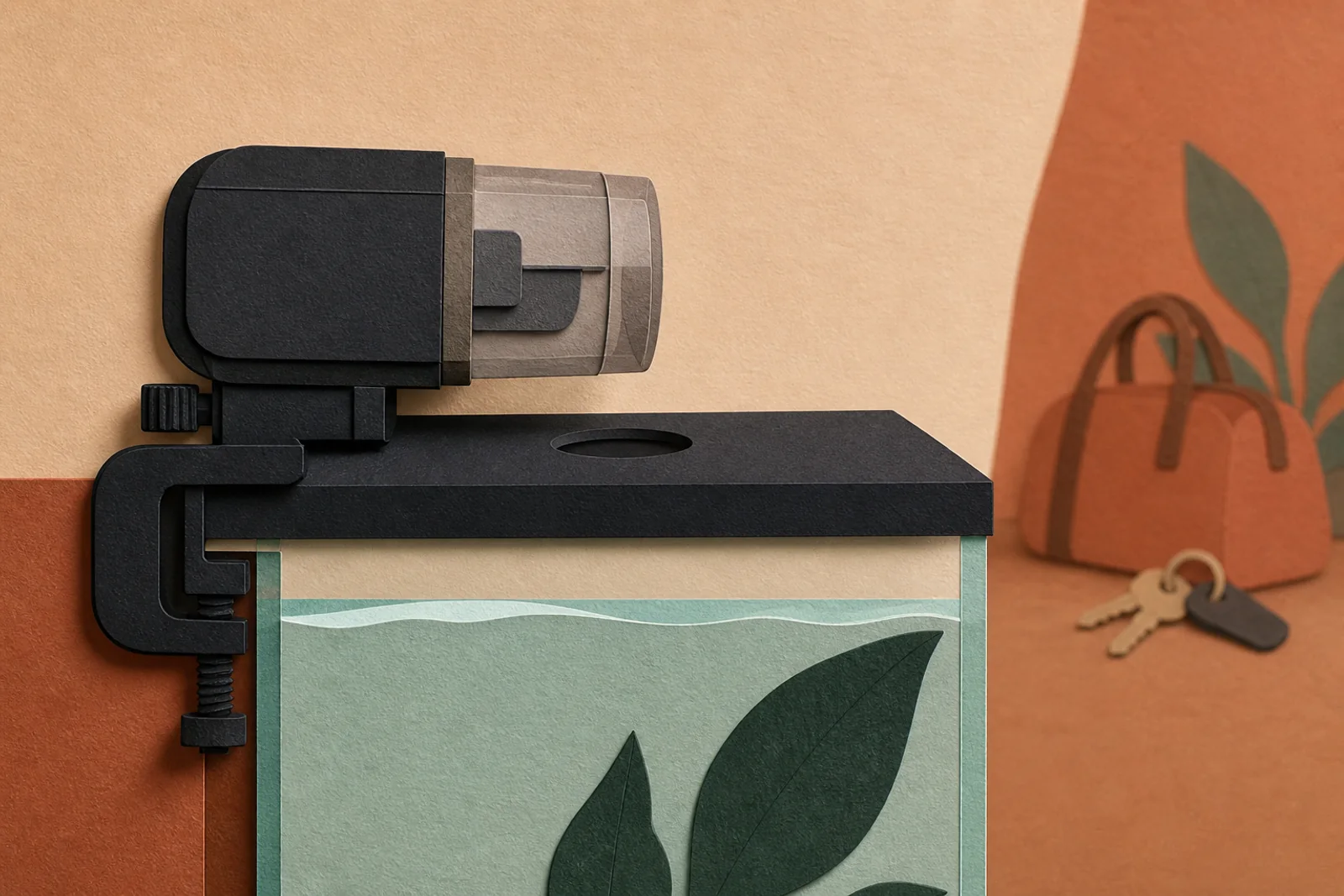
The instinct is to leave extra food. It is the one thing that reliably goes wrong.
A betta eats a few pellets a day. Uneaten food breaks down into ammonia, and while you are away there is nobody to notice the water going bad or to siphon out what the fish did not eat. A slightly hungry betta in clean water is in far better shape than a well fed one in fouled water.
By trip length
| Away for | What to do |
|---|---|
| Up to 3 days | Nothing. Feed normally before you go and again when you return |
| 4 to 7 days | Nothing, for a healthy adult. Or one visit mid-week |
| 8 to 14 days | A person, or a tested auto feeder set to underdose |
| Over 2 weeks | A person visiting twice a week. Not a device |
The first two rows surprise people, and they are the most common trip lengths. A healthy adult betta simply does not need feeding for a week.
Before you go
Do these in the few days before, not on the morning you leave.
- Test the water. Ammonia and nitrite at zero, nitrate low. Fix anything first.
- Do a water change two or three days early, so the tank has settled by the time you leave and any disturbance has passed.
- Check the heater against a separate thermometer, and check the filter flow.
- Clean the filter media if it is due, in removed tank water, a week early rather than the day before.
- Feed normally. Do not load the fish up.
- Top the water level up so evaporation over a fortnight does not expose the heater or the filter intake.
- Make sure the lid is properly seated. Nobody will be there to find a jumper.
That last one and the heater check matter more than the feeding plan does.
What never to use
Vacation feeder blocks. Those plaster or gel slabs marketed for holidays dissolve into the water continuously whether the fish is eating or not. They cloud the tank, raise hardness and add ammonia, and a betta will not eat most of what comes off them. They solve a problem that a healthy adult betta does not have.
Also skip the approach of tipping a week of pellets in on the last morning. Most of it reaches the substrate and rots.
If you use an auto feeder
Two rules, and both get broken.
Set the portion smaller than seems right. Most feeders dispense more than the dial suggests, and the failure mode you care about is too much rather than too little.
Test it at home for a full week before the trip. Watch how much actually lands in the water, confirm it does not jam on damp pellets, and check the batteries. A feeder tested for the first time while you are in another country is a coin flip.
Keep it in the tank’s warm humid air as little as possible. Pellets absorb moisture and clump, which is the usual cause of a jam.
If you use a person
Pre-portion the food into small labelled containers or a pill organiser, one per feeding day. This is the whole trick. Left with a tub, a well meaning visitor will feed generously, because that is what caring for an animal feels like.
Tell them explicitly: skipping a feed is fine, doubling one is not.
Ask them to look at the fish and read the thermometer. Ask them not to clean anything, not to change water unless you have shown them how, and not to add anything to the tank.
Leave your number and a photo of the fish looking normal, so they can tell whether something has changed.
The risk that is not food
A heater failing, or a power cut, while nobody is watching.
A heater stuck on cooks the tank. A heater that dies lets it track room temperature. Either can happen over two weeks and neither is detectable remotely without equipment most keepers do not have.
If the trip is long and the season is cold, that is the actual argument for asking someone to visit, rather than the feeding.
Where to go next
The portion guide covers how much to feed normally, and the fasting article covers why a betta handles a missed day without difficulty.