
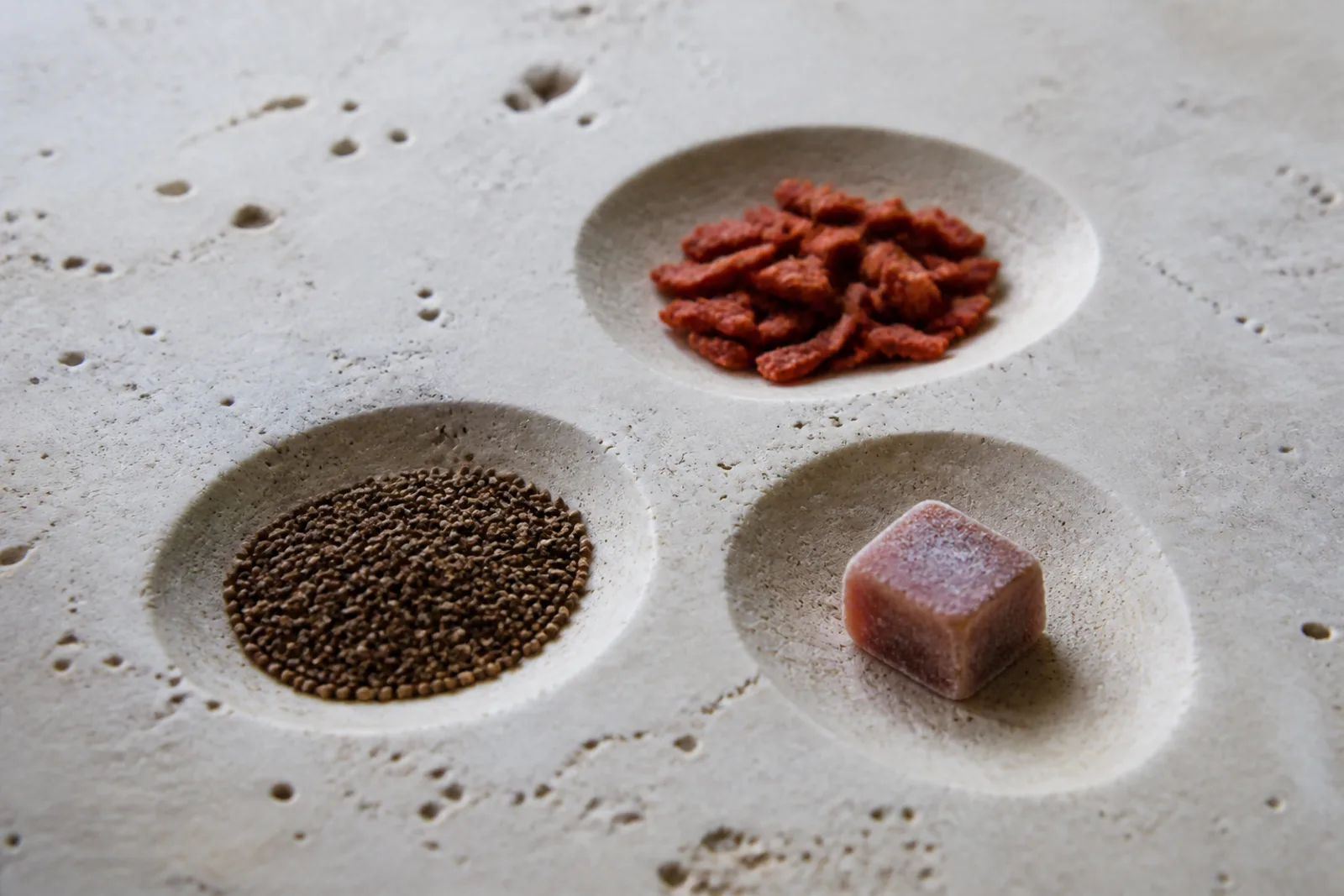
Bettas are carnivores. That single fact eliminates most of what is sold as general-purpose fish food, and it is the lens for everything below.
Reading a label
Two things on the packaging matter. Everything else is decoration.
The first three ingredients. They make up most of the food. You want a named animal protein leading: fish meal, krill, shrimp, black soldier fly larvae. What you do not want is wheat, corn, potato or an unspecified “fish derivatives” in first place.
The protein percentage. Around 40 percent or higher suits a carnivore. Below about 35 and the food is padded.
| On the label | Reading |
|---|---|
| Fish meal, krill, shrimp first | Good sign |
| Black soldier fly larvae | Good, increasingly common |
| Wheat, corn or potato first | Padded with filler |
| “Fish derivatives”, unspecified | No way to judge quality |
| Protein 40% or above | Appropriate |
| Protein below 35% | Too low for a betta |
The three formats
Pellets, the staple
Floating, small enough for the fish’s mouth, from a tub you will finish in a few months. This is the everyday food and it should be the bulk of the diet.
Store it sealed and dry. Vitamins degrade after opening, so a tub that lasts a year is not a bargain. Buy the small size.
If your fish mouths pellets and spits them out, they may be too large or too hard. Soaking them for a minute in tank water fixes both.
Frozen, the best supplement
Bloodworms, brine shrimp and daphnia, sold in blister packs or slabs.
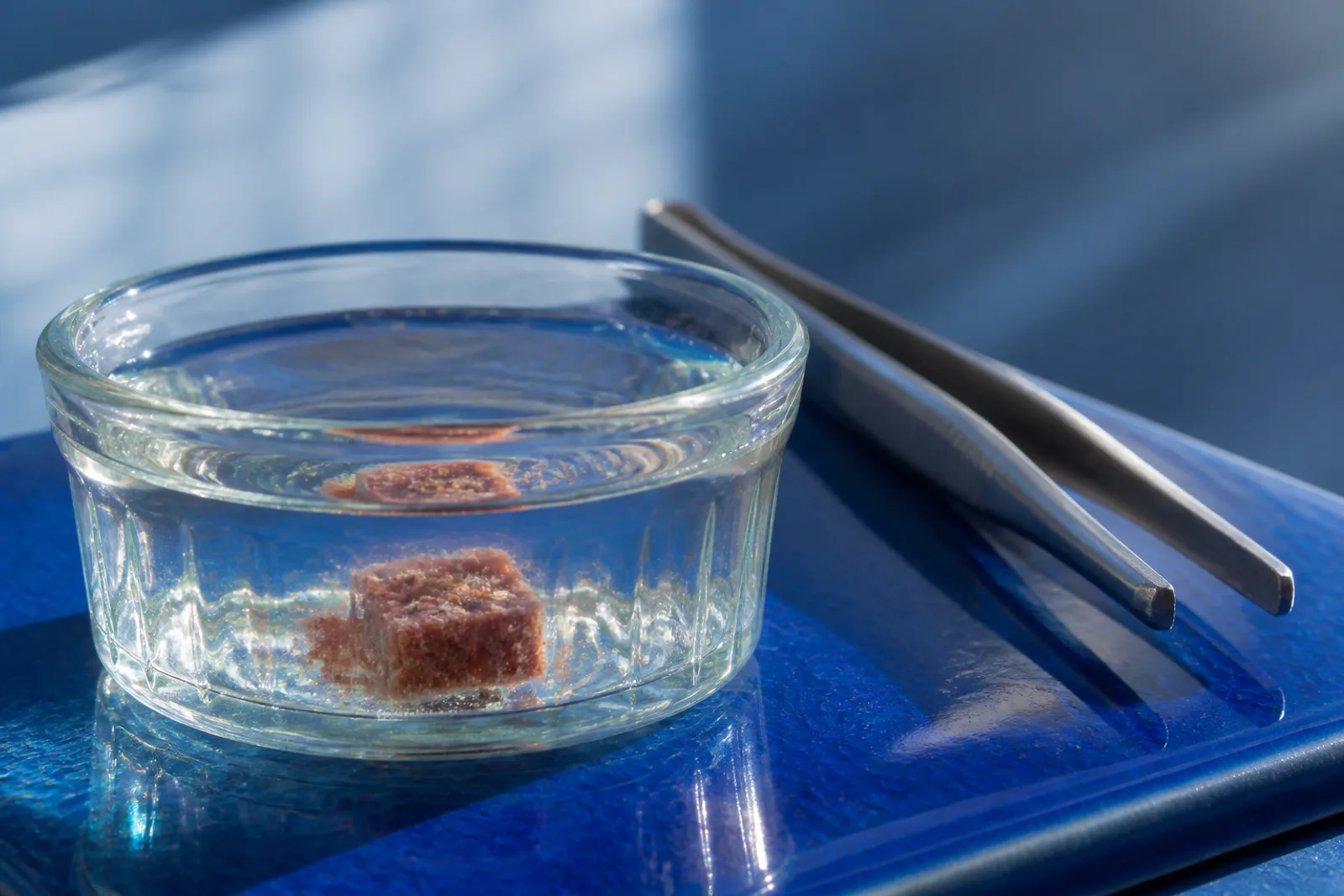
Thaw a small portion in a little tank water and feed a couple of worms rather than a clump. Never drop a frozen block in whole. Two or three times a week is plenty, and daphnia in particular helps with constipation.
Frozen is the format we would default to for supplements: better texture, better hydration, and none of the expansion problem.
Live, the enrichment
Brine shrimp, daphnia, mosquito larvae and white worms, if you have a reliable source or culture your own.
The behavioural difference is obvious. A betta hunts live food, and that is genuine enrichment. The cost is convenience and a real disease risk from live food of unknown origin.
Freeze-dried, with caution
Convenient and shelf-stable. It also expands once eaten, and heavy feeding of freeze-dried bloodworms is associated with bloating.
Soak it before feeding and treat it as an occasional treat rather than a rotation staple.
A workable week
One arrangement that suits most adult bettas:
Five days of pellets, once or twice daily at two to four pellets. One day of a frozen supplement, a few bloodworms or a small portion of brine shrimp. One fasting day.
Nothing about that is prescriptive. The principles are: pellets carry the diet, supplements add variety a couple of times a week, and one day off helps digestion.
What to skip
Community tropical flakes as a staple, because they are largely plant matter.
Goldfish food, formulated for a completely different digestive system.
Anything described as a treat that is mostly binder and colouring.
Human food of any kind, including the bread that gets suggested surprisingly often.
Bulk tubs. The saving is real and the vitamin content is gone before you finish it.
On the affiliate side
Some links here earn a commission, and food is a repeat purchase, which makes it commercially attractive to push a premium brand.
Our position: the criteria above are what matter, and a mid-priced pellet meeting them will do as well as an expensive one that does not. Where we have not run a product ourselves, we say so rather than ranking it.
Where to go next
Knowing what to buy is half of it. Portion size is where most harm actually happens.