
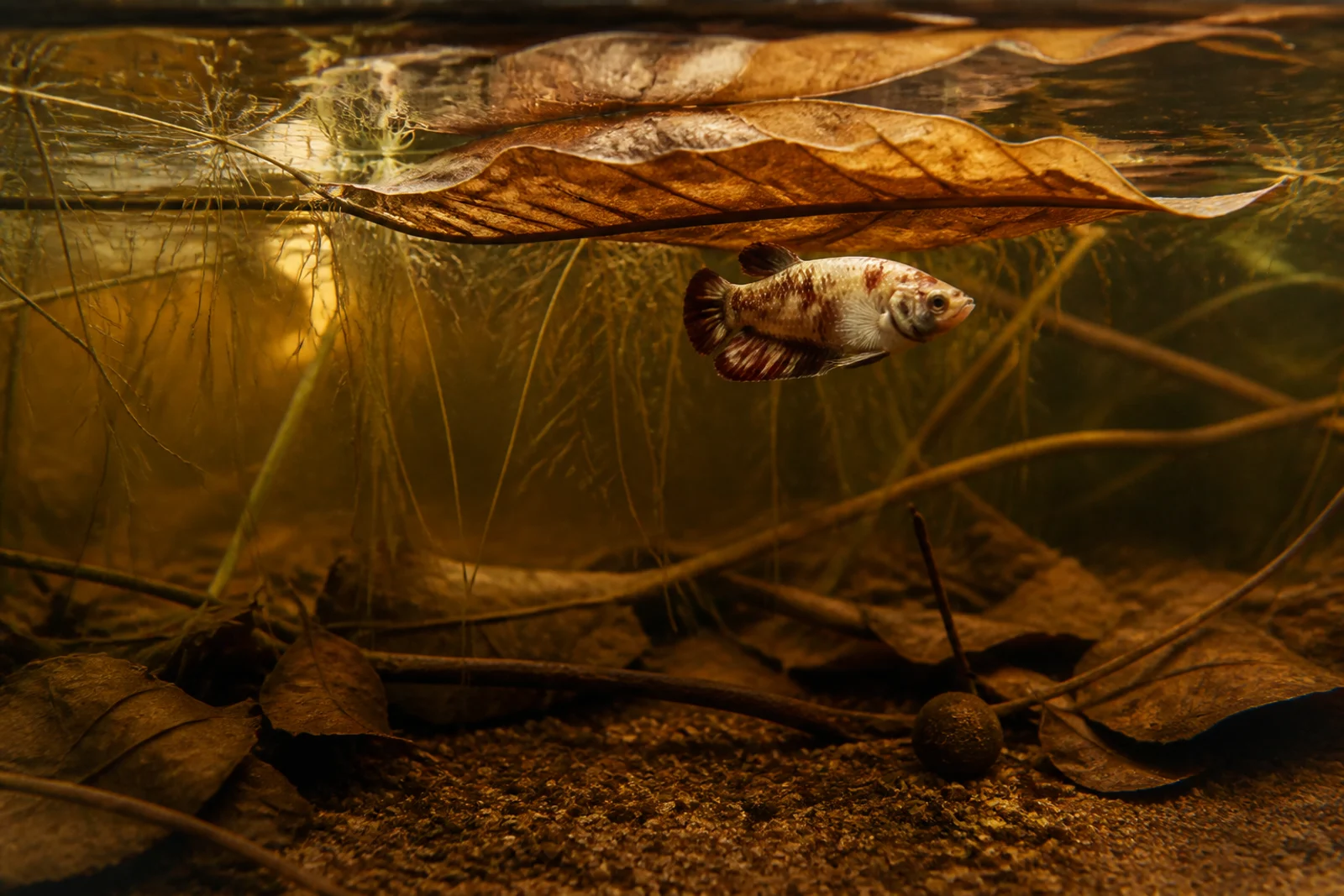
Three to five years, in conditions that suit them. Seven is not unheard of.
Kept the way bettas are usually sold, in an unheated bowl with no cycled filter, a great many die within months. That gap is not genetics. It is the setup.
You are not starting from zero
The fish in the cup is already an adult, typically six to twelve months old. Males are grown out until their finnage is worth selling, so the clock has been running for a while before you get involved.
This matters for two reasons. A betta that lives two more years after you buy it may well have had a full life. And a betta that dies in its first month with you did not die of old age, however tempting that explanation is.
What actually shortens it
In rough order of how often each is the cause.
| Cause | What it does |
|---|---|
| Uncycled water | Ammonia burns gills and fins. The most common killer by a distance |
| No heater | Repeated chilling suppresses the immune system over weeks |
| Tank too small | Waste concentrates and temperature swings faster than you can correct |
| Overfeeding | Bloating and constipation, plus more ammonia from leftovers |
| Strong flow | A fish fighting current all day is a fish under constant stress |
| No lid | Bettas jump, and this kills otherwise healthy fish outright |
Nothing on that list is exotic and nothing on it is expensive to fix. That is the frustrating part: most shortened betta lives are the result of equipment that costs less than replacing the fish twice.
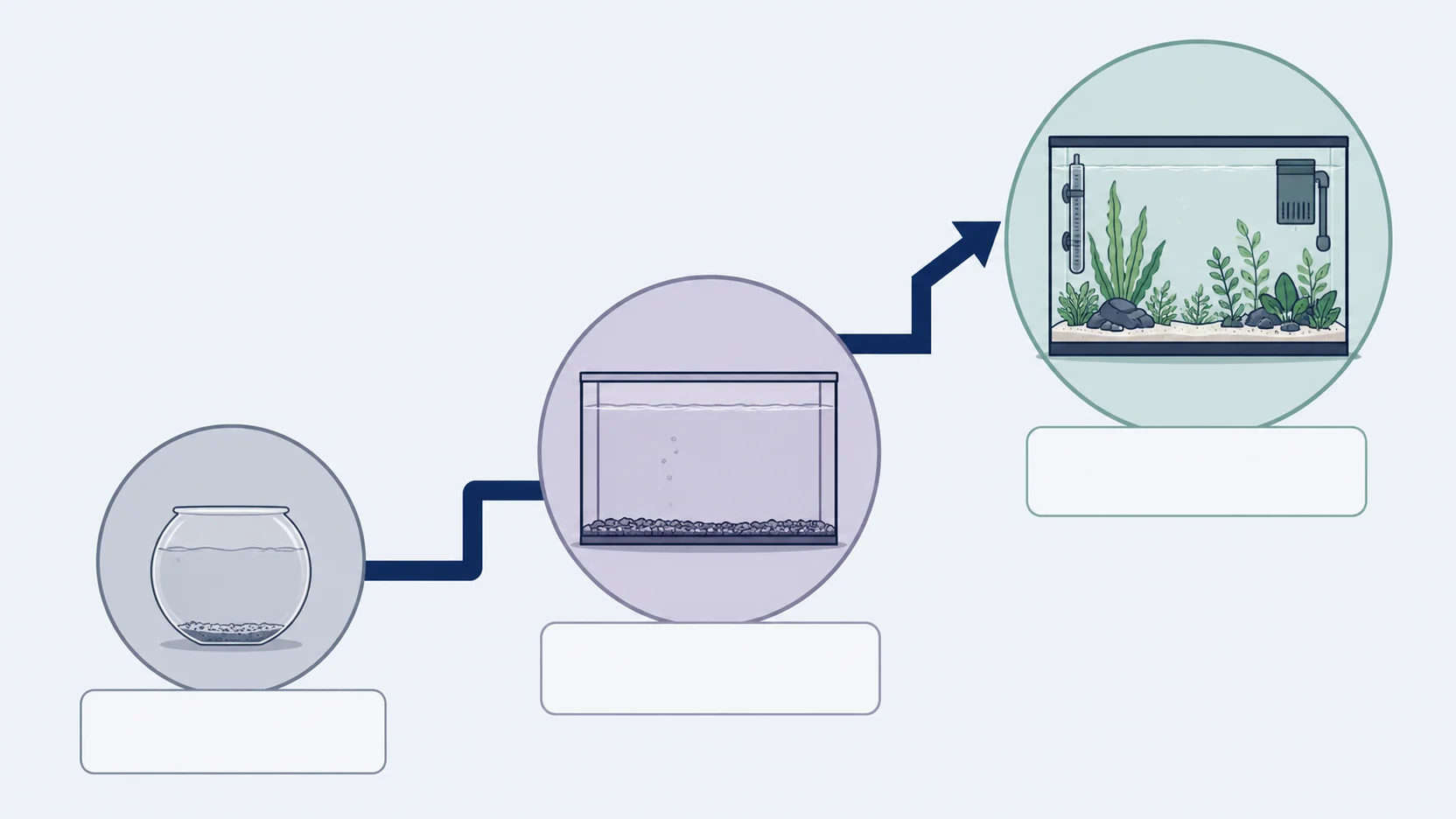
- Bowl
- Unheated tank
- Heated, filtered tank
What extends it
The same list, inverted. There is no supplement or technique here, only the basics done properly.
Keep the water cycled and test it weekly, because ammonia and nitrite at zero is the single largest factor. Hold the temperature steady in the 25 to 28 °C range rather than chasing a number. Give the fish at least five gallons, and ten if you can, since volume forgives mistakes.
Feed two to four pellets once or twice a day with a fasting day each week. Keep flow gentle, especially for long-finned fish. Fit a lid. Leave the tank alone between water changes rather than rearranging it constantly.
Ageing, and what it looks like
An old betta is not a sick betta, and the difference is worth being able to see.
| Normal with age | Worth investigating |
|---|---|
| Colour fading gradually | Colour lost alongside clamped fins |
| Resting on leaves or substrate more | Lying on the bottom and refusing food |
| Slower, less reactive | Sudden lethargy over a day or two |
| Fins thinner or slightly curled | Ragged edges, white patches, fuzz |
| Eating a little less | Not eating at all for more than a week |
The pattern that separates them: an ageing fish is slower but still functioning. An ill fish stops doing things it was doing last week.
When something in the right-hand column appears, test the water first. It explains more cases than any disease does.
End of life
A betta at the end of a long life slows over weeks, spends most of its time resting, and eventually stops feeding. There is often nothing to treat.
What you can do is keep the water clean, keep the temperature steady, lower the flow, and add a resting spot near the surface so a weakening fish is not swimming far for air. If it is clearly suffering rather than simply old, an aquatic veterinarian can advise on euthanasia, and that is a legitimate thing to ask about.
If yours died early
It is worth working out why rather than replacing the fish and repeating it.
Test the water that is still in the tank. Ammonia or nitrite above zero tells you most of the story. Check the thermometer, not the heater dial. Ask whether the tank was cycled before the fish went in, since most are not.
You were probably given the wrong advice at the point of sale, along with a tank too small and no mention of cycling. That is the common case, not a personal failure.
Where to go next
The complete care guide covers the whole setup in order, and it is the shortest route to the top of that lifespan range.